“CLEVER” OR A MAJOR SECURITY TEST? One Nation’s ISIS Bill Puts Australia’s Counter-Terrorism Laws Under the Microscope
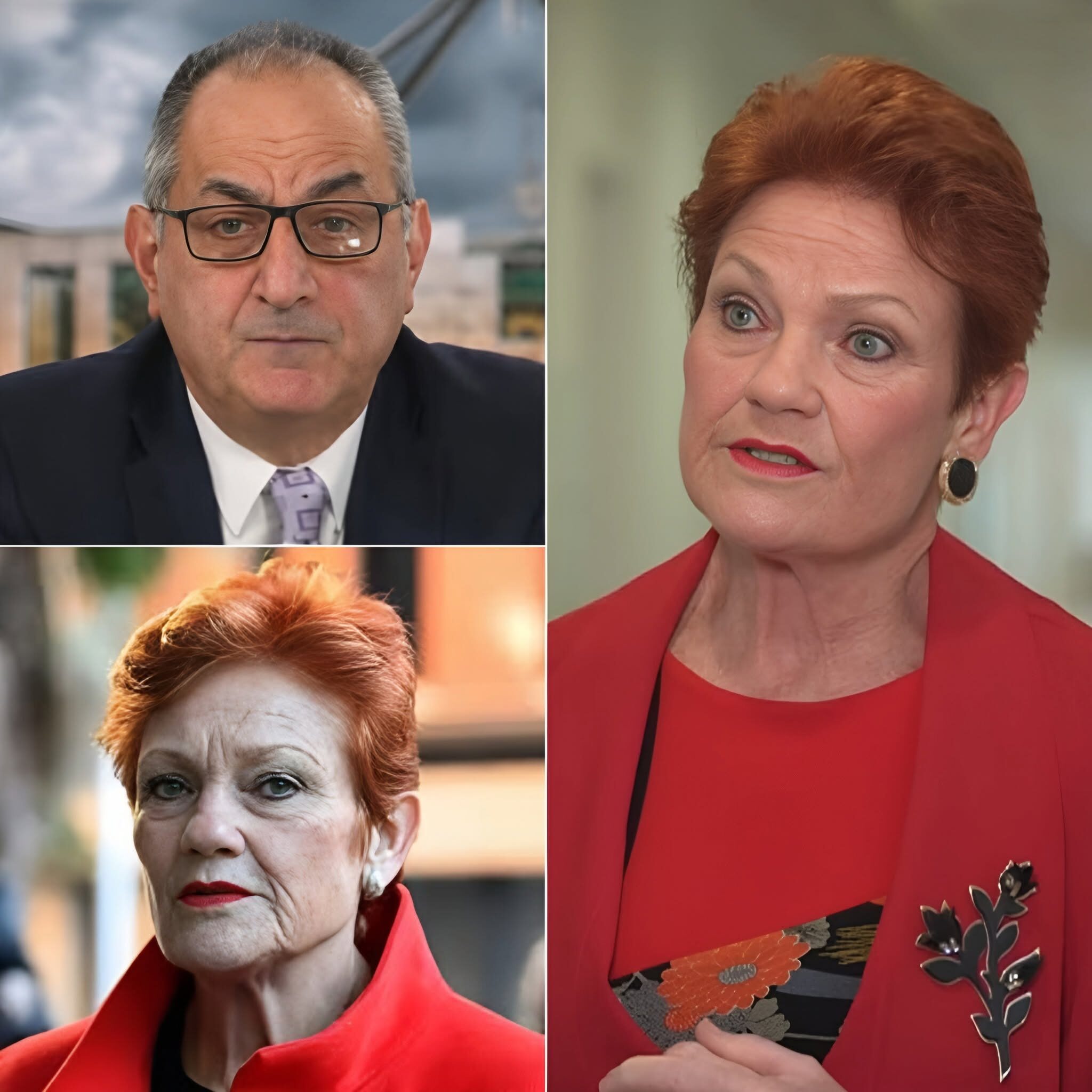
Australia’s increasingly heated debate over the return of Australians linked to Islamic State has entered a new phase, with Pauline Hanson’s One Nation putting forward legislation designed to make it harder for suspected foreign terrorist fighters to return to the country. The proposal is being promoted by One Nation as one of the most comprehensive attempts by any political party to strengthen Australia’s national-security framework, while former Home Affairs secretary Mike Pezzullo has reportedly acknowledged that the proposal contains considerable thought and described elements of it as “clever.”
The political significance of the proposal goes well beyond one bill. It has reopened a difficult question that successive Australian governments have struggled to resolve: how can Australia protect its citizens from individuals suspected of having joined a terrorist organisation overseas while simultaneously respecting constitutional rights, judicial oversight, and the rule of law?


The issue has become particularly sensitive following continuing concerns about Australians who travelled to Syria and Iraq during the period when Islamic State controlled territory in the region. The Australian government has already used existing counter-terrorism powers to restrict the return of certain individuals. In February, Home Affairs Minister Tony Burke confirmed that a temporary exclusion order had been issued against one Australian citizen held in Syria, while emphasizing that the legal threshold for such orders is high.
That legal threshold is at the heart of the political argument.
One Nation’s position is that existing laws do not go far enough and that Australia should have stronger mechanisms to prevent people who travelled overseas to join or support terrorist organisations from simply returning to Australian territory. The party has proposed a package of measures involving exclusion orders, passports, terrorism offences, bail conditions and penalties for people who knowingly facilitate the return of individuals subject to restrictions.




For One Nation, this is fundamentally a national-security issue.
The party argues that the first responsibility of government is to protect Australian citizens and that people who voluntarily travelled overseas to join Islamic State should face the strongest lawful restrictions possible when attempting to return.
But the legal question is considerably more complicated.
Australia cannot simply treat citizenship as something that can be switched off whenever national-security concerns arise. The government has previously acknowledged constitutional limitations surrounding the permanent exclusion of Australian citizens. Mark Butler, speaking for the government in July, noted that existing temporary exclusion laws were developed with bipartisan support and that the constitutional limitations surrounding citizens returning to Australia have been examined extensively.
That reality makes the One Nation proposal particularly interesting.
The political challenge is not simply to write a bill that sounds tough.
It is to design legislation that is tough while remaining legally enforceable.


This is where the reported assessment from Mike Pezzullo becomes significant.
As a former secretary of the Department of Home Affairs, Pezzullo spent years at the centre of Australia’s immigration, border protection, and national-security machinery. His reported description of the One Nation proposal as “clever” carries political weight because it suggests that the legislation deserves consideration on its technical merits rather than being dismissed simply because it originated with a minor party.
That does not mean Pezzullo has endorsed every element of the bill, nor does it establish that the proposal is legally guaranteed to succeed.
But it does highlight an important point: national-security legislation can be judged independently of the political identity of the party proposing it.
The One Nation bill reportedly runs to 22 pages and seeks to amend several existing laws rather than relying on a single sweeping prohibition. Among its proposed mechanisms are changes involving temporary exclusion orders, the suspension of return permits while legal proceedings are underway, stronger bail conditions for terrorism-related offences, and new offences targeting people who facilitate the unauthorized return of terrorist-linked individuals.
That approach is politically important because it attempts to deal with multiple stages of the problem.
The question is not simply whether someone can physically board an aircraft.
It begins much earlier.
Can their passport be suspended or restricted?
Can an exclusion order prevent their return for a period?
What happens if they challenge the decision in court?
Can someone else legally assist them in circumventing the restrictions?
What happens once they reach Australian territory?
And what evidence is required before the government can take action?
A serious counter-terrorism framework must answer all of those questions.


This is also why the debate cannot simply be reduced to whether politicians are “tough” enough on terrorism.
Australia already has extensive counter-terrorism legislation.
The government has repeatedly stated that it will use every legal instrument available to restrict the return of people suspected of having joined Islamic State. Tony Burke has said that if there is a lawful mechanism available to prevent someone who voluntarily joined ISIS from returning, he intends to use it.
The Coalition has also argued that the government should take stronger action.
One Nation is attempting to push the debate even further.
That creates an unusual political situation in which the major parties and a minor party broadly agree that individuals with credible links to Islamic State represent a potential security concern, but disagree over how far the law should go and whether existing powers are sufficient.
The constitutional dimension makes the disagreement particularly important.
If a government attempts to permanently prevent an Australian citizen from returning, it must confront fundamental legal principles concerning citizenship and the right of citizens to enter their own country. Existing temporary exclusion powers were specifically designed to operate within those constitutional constraints rather than simply ignoring them.
One Nation’s strategy appears to be to strengthen the legal framework without relying solely on an absolute prohibition.
That distinction could prove critical.
A policy can be politically popular yet legally vulnerable.
A government can announce extremely tough measures, only to discover that courts or constitutional limitations prevent them from operating as intended.
The real test of the One Nation bill will therefore be whether its proposed mechanisms can survive parliamentary scrutiny and judicial examination.


There is also a wider political calculation behind the proposal.
Pauline Hanson and One Nation have been gaining political momentum by arguing that Australia’s major parties have been too cautious on immigration, border security and national identity. The ISIS-return debate fits naturally into that political narrative.
By introducing detailed legislation rather than simply demanding stronger action, One Nation is attempting to demonstrate that it can participate in serious policy development.
That matters because minor parties often face a fundamental political problem: they can attract attention by criticizing governments, but they are judged more seriously when they claim they are ready to govern.
A bill dealing with terrorism and citizenship therefore becomes a test of political maturity.
Can One Nation move from rhetoric to legislation?
Can it convince the Coalition to support its proposals?
Can it persuade the government that the existing legal framework requires strengthening?
And can it do so without proposing measures that ultimately collapse under constitutional challenge?
Those questions will determine whether the bill becomes an important piece of Australia’s national-security debate or remains primarily a political statement.
There is another reason the issue matters.
The people at the centre of the debate are not simply abstract security cases. They represent a difficult legacy of the Islamic State conflict, in which Australian citizens travelled to a foreign war zone and became associated in various ways with an organisation responsible for terrorism and mass atrocities.
At the same time, Australian authorities must distinguish between individuals based on evidence rather than political labels.
A person suspected of terrorist involvement is not automatically guilty of a terrorism offence.
That distinction is fundamental to Australia’s legal system.


This is ultimately where the One Nation proposal faces its greatest test.
The strongest national-security legislation is not necessarily the legislation with the harshest language. It is legislation that can identify genuine threats, withstand judicial scrutiny, give security agencies effective tools, and protect the public without abandoning the legal principles that Australia is trying to defend.
That is why the reported reaction from Mike Pezzullo is potentially important. If a former senior Home Affairs official sees elements of the proposal as carefully constructed or “clever,” policymakers should at least examine the substance rather than dismissing it because of its political origins.
At the same time, an expert compliment does not automatically prove that a bill is necessary, constitutional, or effective.
Those questions must ultimately be answered through parliamentary debate, legal analysis, intelligence assessments, and public scrutiny.
The government has already made clear that it considers the return of suspected ISIS fighters a serious security issue and that it will use the existing law where the legal threshold is met. One Nation is now challenging the government to go further, arguing that Australia’s laws should be strengthened before another potential security threat reaches Australian soil.
The political pressure is therefore unlikely to disappear.
Ultimately, the significance of One Nation’s bill lies not only in the specific measures it proposes but in the larger question it forces Australian politics to confront: how much power should a democratic government have to restrict the return of its own citizens when intelligence agencies believe those citizens may pose a national-security threat? There is no simple answer. Australians understandably expect their government to prevent terrorism and protect the community, but those protections must operate within the Constitution and the rule of law. The real measure of this legislation will therefore not be how loudly politicians describe it as “tough,” but whether its carefully constructed provisions can actually protect Australians, survive legal scrutiny, and close genuine gaps in the existing system. If One Nation can demonstrate that its proposal achieves all three, it may force even its political opponents to reconsider the assumption that national-security policy should remain the exclusive territory of the major parties.