“DEFUND THE ABC”: One Nation Renews Push to Scrap $1.2 Billion in Taxpayer Funding After Broadcaster’s Gina Rinehart Apology
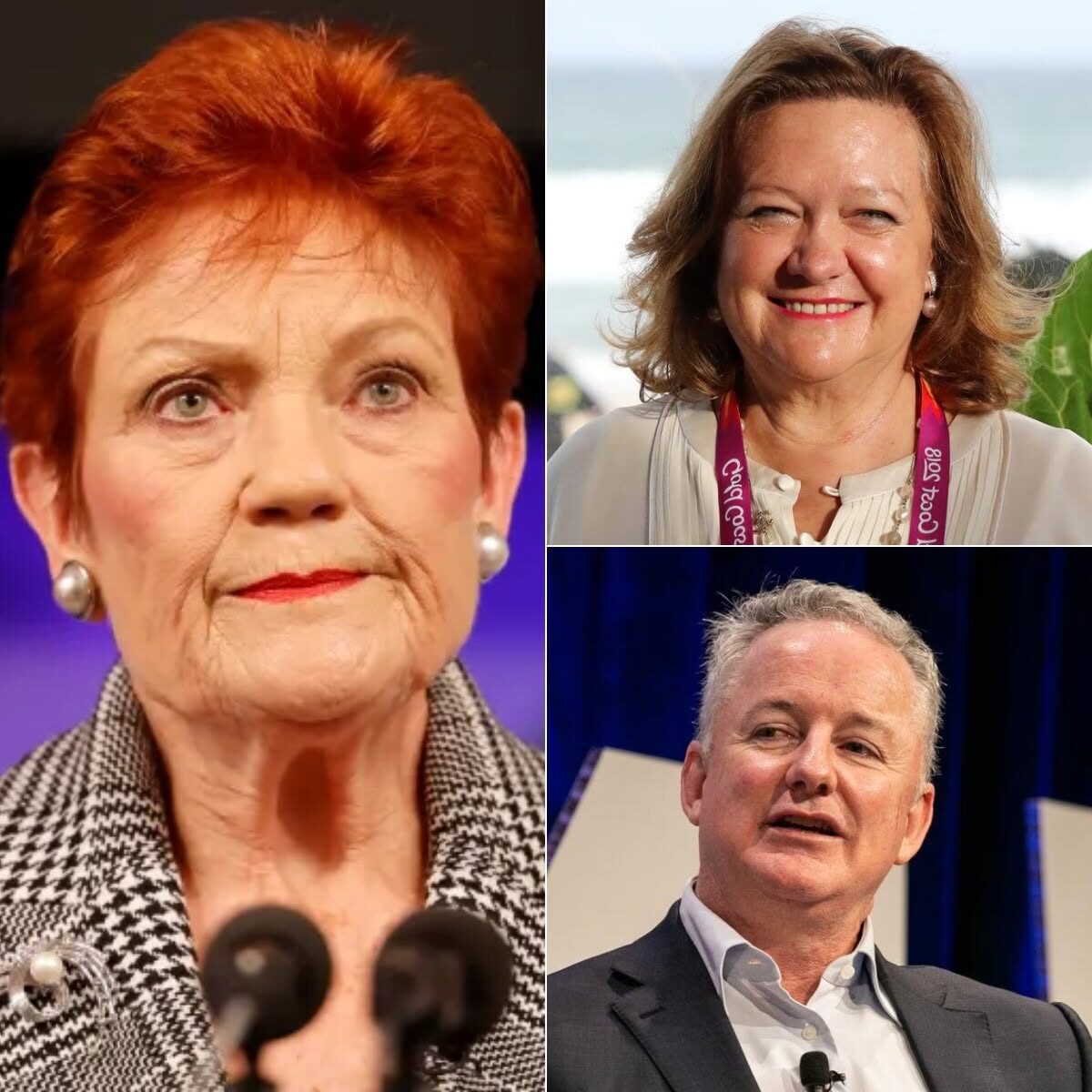 🚨 “DEFUND THE ABC”: One Nation Renews Push to Scrap $1.2 Billion in Taxpayer Funding After Broadcaster’s Gina Rinehart Apology
Australia’s long-running debate over the role, funding, and impartiality of the Australian Broadcasting Corporation (ABC) has erupted once again, with Pauline Hanson’s One Nation renewing its call to strip the national broadcaster of its $1.2 billion annual taxpayer funding. The latest confrontation follows the ABC’s decision to apologise to mining billionaire Gina Rinehart after weeks of controversy surrounding a graphic segment that critics argued unfairly portrayed one of Australia’s most influential business figures.
For One Nation, the apology is not merely an isolated editorial correction. Instead, the party argues it exposes deeper structural problems within the publicly funded broadcaster—raising fresh questions about accountability, political neutrality, and whether Australian taxpayers should continue financing an institution that critics claim has repeatedly demonstrated ideological bias.


The controversy began after the ABC aired a graphic segment that included Gina Rinehart in a manner that quickly attracted widespread criticism. While the broadcaster later acknowledged concerns and eventually apologised, the delay between the original broadcast and the formal apology became a central point of political criticism.
Supporters of Rinehart argued that the correction came far too late, allowing reputational damage to spread before the broadcaster accepted responsibility. Critics questioned why Australia’s national broadcaster required weeks to address concerns that many believed should have been resolved immediately.
The ABC has defended its editorial processes, maintaining that complaints must be properly reviewed before formal decisions are made. Nevertheless, the delayed apology has provided fresh ammunition for long-standing critics who argue the broadcaster applies inconsistent editorial standards.




Among the strongest voices has been Pauline Hanson’s One Nation.
The party argues that the incident reinforces concerns it has expressed for years regarding political balance inside Australia’s publicly funded media.
Rather than viewing the apology as evidence that accountability mechanisms work, One Nation sees it as confirmation that serious editorial failures continue to occur despite the broadcaster receiving substantial taxpayer support.
As a result, the party has once again called for the ABC’s public funding to be dramatically reduced—or removed altogether.


The proposal reignites one of Australia’s most persistent political debates.
Every year, the ABC receives approximately $1.2 billion in public funding to operate television, radio, digital news, educational programming, and regional broadcasting services across the country. Supporters argue this investment ensures Australians have access to independent journalism, emergency broadcasting, educational content, and services that commercial media may not provide.
Critics, however, argue that public funding also creates an obligation to demonstrate strict political impartiality.
For One Nation, this obligation has not been met.
Pauline Hanson has repeatedly accused the ABC of displaying institutional bias against conservative parties and right-of-center political figures. According to Hanson, the broadcaster routinely applies greater scrutiny to politicians and public figures who challenge progressive positions while offering comparatively softer treatment to voices from the political left.
The ABC has consistently rejected such allegations.
Its editorial policies require journalists to maintain independence, fairness, and accuracy, and the broadcaster argues that criticism from across the political spectrum demonstrates its willingness to scrutinize all governments and public figures regardless of ideology.
Still, debates over impartiality have persisted for decades.
The latest dispute involving Gina Rinehart has once again brought those arguments into national focus.


The issue extends beyond a single apology.
It raises broader questions about the responsibilities attached to public funding.
Unlike commercial media organizations, the ABC operates with significant taxpayer support, giving it a unique position within Australia’s media landscape. Supporters argue that this funding protects editorial independence by reducing reliance on advertisers and corporate interests.
Opponents counter that guaranteed public funding may also reduce incentives for accountability if audiences cannot directly influence the broadcaster’s financial position.
One Nation argues that taxpayers should not be compelled to finance a media organization they believe consistently misrepresents their political views.
Supporters of the ABC respond that eliminating public funding could weaken regional broadcasting, emergency communication services, children’s programming, and investigative journalism that commercial outlets often struggle to sustain.
This tension illustrates the competing visions surrounding public broadcasting.
One side views the ABC primarily as an essential democratic institution.
The other increasingly sees it as a politically influential organization that should compete on equal terms with private media rather than relying upon guaranteed government funding.
The controversy surrounding Gina Rinehart has therefore become symbolic of a much larger ideological conflict.


Gina Rinehart herself has frequently been a polarizing public figure.
As one of Australia’s wealthiest business leaders and a prominent voice on taxation, mining, energy policy, and economic reform, she has often attracted both praise and criticism. Her supporters argue she represents entrepreneurship, investment, and economic growth, while critics frequently challenge her views on climate policy, industrial relations, and corporate influence.
Because of her public profile, media coverage involving Rinehart inevitably attracts significant attention.
The ABC’s eventual apology therefore carried implications extending well beyond one individual.
For One Nation and other conservative critics, it demonstrated that even Australia’s publicly funded broadcaster is capable of serious editorial mistakes involving politically sensitive figures.
Whether those mistakes reflect institutional bias or simply ordinary journalistic error remains the subject of ongoing debate.
That distinction lies at the center of the current political argument.
The timing is also significant.
Australia continues experiencing growing political polarization, with trust in traditional institutions—including governments, media organizations, universities, and major corporations—facing increasing public scrutiny.
Within that environment, disputes involving media impartiality quickly become political controversies in their own right.
Every editorial decision risks becoming part of a broader debate over institutional credibility.


Ultimately, One Nation’s renewed campaign to remove the ABC’s taxpayer funding is about far more than a delayed apology to Gina Rinehart. It reflects a deeper disagreement over the purpose of public broadcasting, the standards expected of publicly funded journalism, and the role media organizations play in shaping political debate. Supporters of the ABC argue that occasional editorial mistakes do not diminish the importance of an independent national broadcaster serving the public interest. Critics insist that institutions receiving more than a billion dollars in taxpayer funding should be held to the highest possible standards of impartiality and accountability. As Australia continues debating the future of its media landscape, the question extends well beyond one apology or one broadcaster: can public trust in national institutions be strengthened through greater transparency and editorial accountability, or will disputes over political bias continue to fuel calls for sweeping structural reform?