Why ABC Boss Hugh Marks Is Standing By Grace Tame Despite Growing Backlash Over Her October 7 Comments
The controversy surrounding Grace Tame has taken another dramatic turn, with ABC managing director Hugh Marks publicly defending the broadcaster’s decision to give the former Australian of the Year her own podcast despite mounting criticism over her comments about the October 7 Hamas attacks and her involvement in pro-Palestinian activism.
For weeks, debate has been building across Australia over whether taxpayer-funded media organisations should continue providing high-profile platforms to public figures whose political activism has sparked intense community division.
Now, with critics demanding answers and supporters accusing opponents of running a coordinated smear campaign, the issue has become one of the most politically charged media controversies of the year.
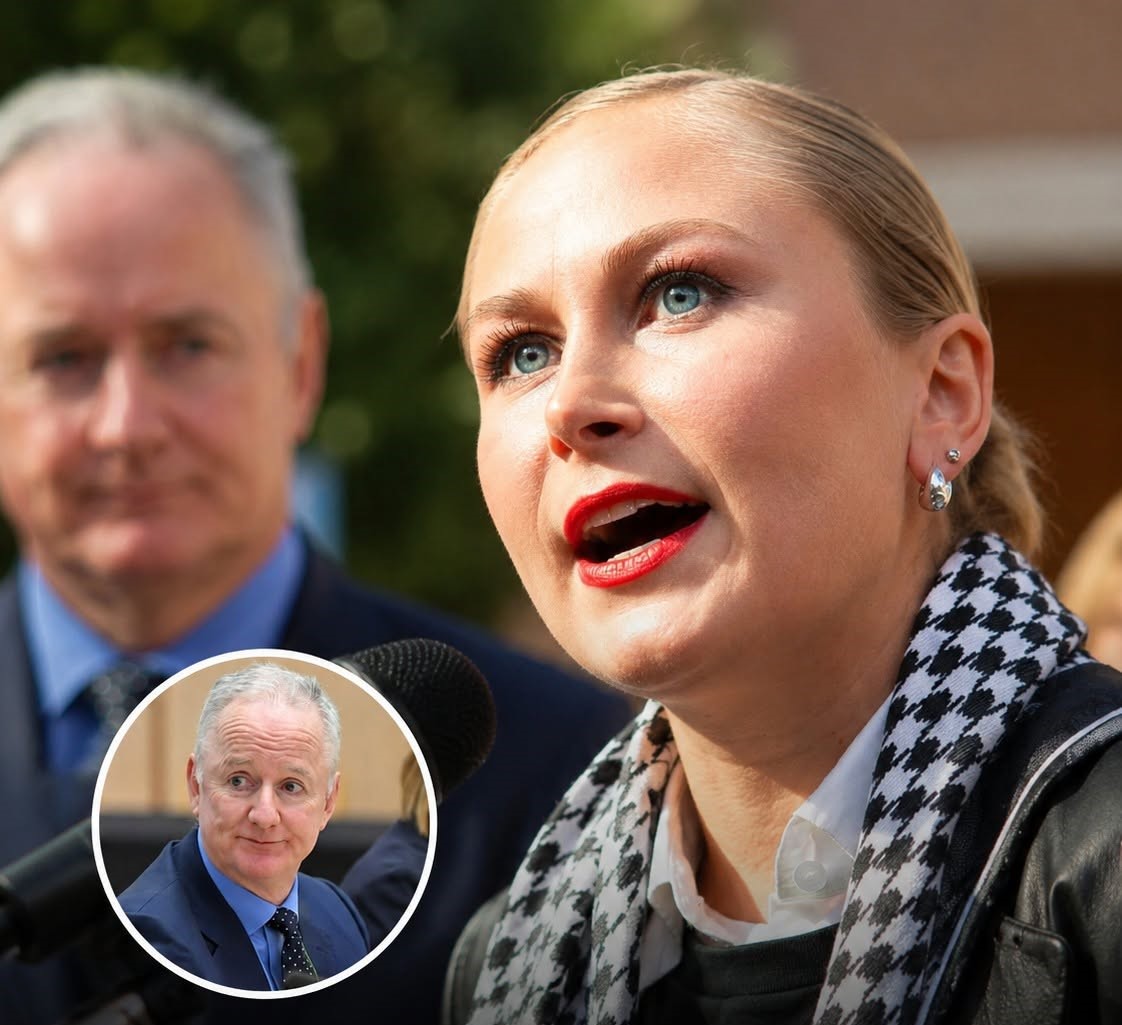
At the centre of the storm is Grace Tame, the former Australian of the Year who rose to national prominence through her advocacy for survivors of child sexual abuse.




More recently, however, Tame has become a polarising figure because of her outspoken views on the Israel-Gaza conflict and comments relating to reports of sexual violence committed during the October 7 attacks.
Those comments triggered widespread criticism from Jewish organisations, political figures and media commentators who argued that her statements crossed a line and caused significant distress within parts of the Australian community.
The backlash intensified further after Tame participated in public demonstrations and became associated with slogans that critics argued were deeply offensive, particularly at a time when concerns about antisemitism were already dominating national discussion.
Ordinarily, such controversy might have led a public broadcaster to step back from a high-profile partnership.
Instead, ABC moved ahead with a new podcast project hosted by Tame.
The program, titled Autistic AF, focuses primarily on autism, personal experiences and interviews rather than Middle East politics.
Even so, the announcement immediately reignited debate about editorial judgment, public trust and the responsibilities of taxpayer-funded institutions.
For many critics, the issue is not the content of the podcast itself.
The concern is whether the ABC should elevate a figure who remains at the centre of ongoing political and cultural disputes.
Opponents argue that public broadcasters have a unique responsibility to maintain broad public confidence.
When a personality becomes deeply divisive, they argue, decisions about appointments inevitably become political.
Supporters of Tame see the matter very differently.
They argue that criticism of the former Australian of the Year has become excessive and increasingly disconnected from the actual purpose of the podcast.
In their view, the project focuses on autism awareness and personal storytelling rather than geopolitical activism.
They contend that attempts to cancel or silence voices because of political disagreements create dangerous precedents for public debate.
That broader argument now sits at the heart of the controversy.
Is the debate really about a podcast?
Or is it about Australia’s increasingly polarised political and cultural environment?
Hugh Marks appears firmly in the second camp.
The ABC chief has publicly defended the broadcaster’s decision and rejected suggestions that Tame should be excluded because of her past comments or activism.
Marks argued that the podcast itself delivers value and speaks to audiences that are often underserved in mainstream media coverage.
He also emphasised that Tame has condemned violence and that the project should be judged on its own merits rather than on political campaigns surrounding her.
Those remarks effectively placed the ABC leadership in direct opposition to many of the broadcaster’s critics.
Rather than distancing itself from controversy, management has chosen to defend the appointment and stand behind the production.
That decision carries risks.
The ABC has long faced accusations from various sides of politics regarding perceived ideological bias.
Conservative critics frequently argue that the broadcaster reflects progressive viewpoints more comfortably than conservative ones.
Supporters of the ABC reject those claims, pointing to the organisation’s editorial standards and public service obligations.
Regardless of which side Australians agree with, the Grace Tame controversy has once again dragged the ABC into a debate about impartiality.
Questions that might otherwise have remained confined to social media have now become national talking points.
That reality became even more obvious when ABC personality Charlie Pickering found himself caught in the middle of the dispute.
After initially describing aspects of the situation as problematic during an unexpected confrontation outside ABC studios, Pickering later clarified his position and reaffirmed his support for Tame.
The episode generated fresh headlines and ensured the story remained in the public spotlight.
For many Australians watching from the sidelines, the controversy also reflects a broader trend.
Political debates increasingly spill into entertainment, media, sport and cultural institutions.
Questions that once belonged primarily to parliament now emerge in workplaces, universities, festivals, broadcasters and online communities.
As a result, organisations often find themselves under pressure to take positions they may never have intended to take.
The ABC is hardly the first institution to face that challenge.
But because it receives public funding and serves a national audience, scrutiny tends to be more intense.
Every major editorial decision attracts attention.
Every controversial appointment becomes a test of public confidence.
That is particularly true when the individual involved already attracts strong opinions from both supporters and critics.
The Grace Tame debate therefore extends well beyond one podcast.
It has become a proxy battle over free expression, activism, public broadcasting and the limits of institutional neutrality.
Some Australians believe public broadcasters should actively amplify challenging voices.
Others believe taxpayer-funded organisations should exercise greater caution when controversy surrounds a public figure.
Neither side appears likely to change its position anytime soon.
What happens next will depend largely on public reaction to the podcast itself.
If audiences respond positively and the content is viewed as informative and constructive, pressure on ABC management could ease.
If fresh controversies emerge, critics will likely point to the decision as evidence that their concerns were justified.
For Hugh Marks, the calculation appears straightforward.
He has made it clear that the ABC intends to stand by its decision.
Whether that strengthens public trust or deepens existing divisions remains to be seen.
What is certain is that the debate surrounding Grace Tame is far from over.
And as Australia continues wrestling with questions about activism, public institutions and freedom of expression, this dispute is likely to remain firmly in the national conversation for some time yet.