“THIS IS NOT JUST POLITICS ANYMORE” — HANSON DROPS A CLIMATE AND SECURITY BOMBSHELL THAT SHAKES CANBERRA

A single interview has reignited Australia’s most divisive debates on climate policy, migration, and national security, after One Nation leader Pauline Hanson laid out an uncompromising vision that challenges the direction of the Albanese government.
Speaking in a wide-ranging television exchange, Hanson signalled that Australia’s political fault lines are hardening around one central question: how much cost should citizens bear for climate policy and security commitments?
The discussion escalated when Hanson doubled down on her opposition to Net Zero, framing it not as environmental necessity but as economic burden. “We want to get rid of net zero completely,” she stated, marking one of her most direct rejections of Australia’s climate framework.
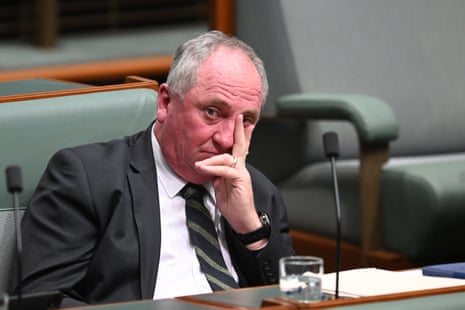




She went further, linking climate policy to institutional structure, suggesting the Department of Climate Change itself should be abolished. “It needs to be gone,” she said, arguing that current policy has delivered financial strain without measurable environmental benefit.
At the heart of her argument is a claim that climate targets have distorted energy pricing and weakened industrial capacity. Hanson framed the issue in stark economic terms, insisting that electricity costs and fuel insecurity are direct consequences of current climate governance.
Her remarks also aligned with Barnaby Joyce’s reported position, where coalition negotiations could include scrapping climate institutions in exchange for support. The idea reflects a growing political undercurrent that climate policy is becoming a bargaining chip rather than consensus ground.

Hanson reinforced this by positioning One Nation as a decisive force in any future parliamentary balance, stating that the party would support supply and confidence arrangements but would refuse ministerial control.
“We want policy,” she said in essence, but made clear that cooperation would come only if key climate commitments were reversed, including withdrawal from the Paris Agreement.
The Paris Agreement itself became a focal point of criticism, with Hanson arguing Australia should exit entirely. Her stance reflects a broader rejection of international climate frameworks that she views as limiting national sovereignty.
In her framing, climate policy is not just an environmental issue but a structural economic constraint that affects manufacturing, migration, and household costs simultaneously.
Yet the interview did not stop at climate policy. It shifted sharply into migration, labour shortages, and national welfare priorities, where Hanson argued that Australia’s workforce issues are being masked by immigration dependency.
She cited local feedback suggesting employers struggle to hire domestic workers, arguing this has led to increased reliance on foreign labour. Her proposed solution was a sharp reduction in migration to 130,000 annually.
The debate intensified when attention turned to national security spending, particularly concerning Australians who returned from ISIS-related conflict zones.
Reports suggesting surveillance costs could reach up to $2 million per person per year sparked strong reactions, with Hanson calling the situation unacceptable for taxpayers.
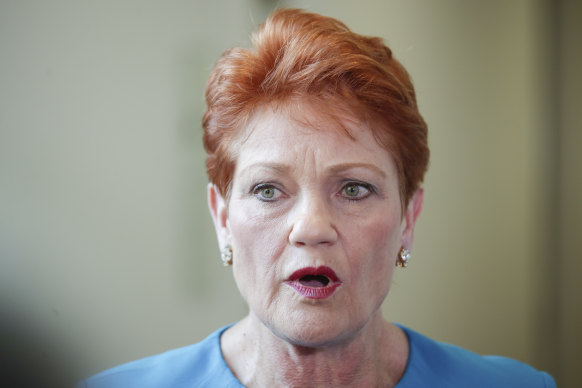
Her language became increasingly forceful as she rejected the idea of long-term public funding for monitoring returnees, arguing that such individuals should not be reintegrated into Australian society.
She framed the issue as both financial and cultural, claiming incompatibility with Australian values and expressing strong opposition to their presence in the country altogether.
On the question of children linked to such cases, Hanson acknowledged competing moral arguments but maintained her position that the broader risk to society outweighed individual considerations.
Her comments escalated into a broader warning about ideological extremism, suggesting that tolerance policies could create long-term security risks if not addressed decisively.
The interview concluded with Hanson reinforcing her central political message: dismantling what she described as “toxic” governing arrangements and redirecting policy toward energy affordability, border control, and national security.
Taken together, her remarks outline a coherent but highly controversial platform that directly challenges Australia’s current climate and immigration direction.
Whether these positions translate into parliamentary influence will depend on future electoral outcomes, coalition negotiations, and the extent to which voter frustration over cost-of-living pressures continues to grow.
For now, the interview has added fresh fuel to an already volatile debate: is Australia’s climate and security policy protecting its future—or placing unsustainable pressure on its present?
COMMENT BELOW: Is it time to rethink Net Zero, or double down on climate commitments?