“THIS IS NOT COMPASSION — IT’S NEGLECT” — Australia EXPLODES After Emotional Senate Speech Over de.@th of 5-Year-Old Girl

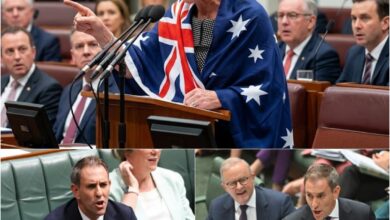
A grieving aunt stood inside Australia’s Parliament fighting back tears.
Moments later, the chamber erupted into one of the most emotionally charged political clashes the country has seen in years.

The de.@th of five-year-old Kumanjayi Little Baby has shaken Australia to its core. But beyond the heartbreak, the tragedy has now ignited a fierce national argument about race, accountability, Indigenous policy, and whether politicians are truly protecting vulnerable children — or simply protecting themselves.
At the center of the storm is Indigenous senator Jacinta Nampijinpa Price.




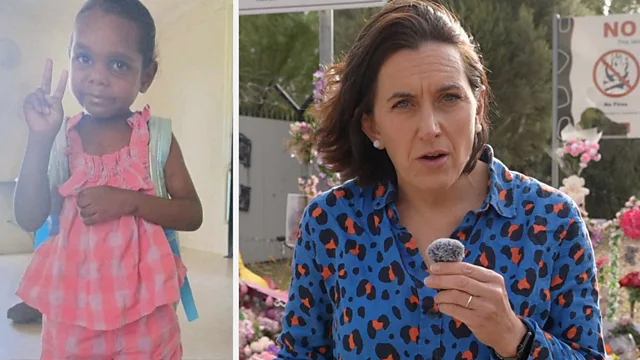
The Northern Territory senator delivered an emotional speech in Parliament after the little girl — her niece — was found de.@d in scrubland near Alice Springs on April 30.
Her voice cracked. Her eyes filled with tears. And then came the words that instantly sent shockwaves across the country.
“We cannot continue hiding behind race,” Price declared.
She accused Australia’s political system of lowering expectations for Aboriginal children while pretending it was an act of compassion.
“We cannot continue pretending that lowering expectations for Aboriginal children is compassion,” she said.
“It’s not compassion. It’s neglect. It’s the racism of low expectations.”
The chamber fell silent as Price continued her attack on what she described as years of political cowardice and ideological excuses.
“Children deserve safety before ideology,” she warned.
“Most of all, we need courage.”
But instead of uniting Parliament, the speech triggered immediate backlash.
Independent senator Lidia Thorpe responded with a completely different message — one that exposed a deep fracture not only inside Parliament, but also within Australia’s broader conversation about Indigenous affairs.
Thorpe accused political figures of exploiting the de.@th of a child to push agendas during a period of mourning.
“This must not become a political football,” she said.
According to Thorpe, the family of Kumanjayi Little Baby did not want the tragedy politicised while they were grieving.
She warned that some of the calls for reform being pushed after the girl’s de.@th could “further harm our people.”
Suddenly, the tragedy became something much larger than a criminal investigation.
It became a national battle over who has the right to speak, who should lead reform, and whether criticism of Indigenous systems is an attempt to help vulnerable children — or an attack disguised as concern.
Price and Thorpe, both Indigenous women, now appeared to represent two completely opposing visions for Australia.
One side demanded urgent intervention, accountability, and a willingness to confront dysfunction head-on, even if the conversation became uncomfortable.
The other warned that political outrage was being weaponised against Indigenous communities under the guise of compassion.
As clips of the speeches spread online, Australians erupted into fierce debate.
Supporters of Jacinta Price praised her for “saying what nobody else dares to say.”
Many argued that fear of being labelled racist had stopped governments from confronting violence, neglect, and dangerous living conditions in remote communities.
Others said Price’s words reflected the frustrations of ordinary Australians who believe ideology has replaced practical solutions.
Critics, however, accused conservatives of using the tragedy to attack Indigenous self-determination and community leadership.
For them, Thorpe’s warning about turning grief into politics struck a powerful chord.
The clash became even more explosive because of the horrifying circumstances surrounding the child’s de.@th.
Police allege 47-year-old Jefferson Lewis murdered the five-year-old girl. He has been charged but has not yet entered a plea.
The case triggered riots in Alice Springs shortly after the arrest.
Hundreds of people gathered outside the hospital where Lewis was taken by police before authorities flew him to Darwin for his own safety.
Images from the unrest quickly spread across Australian media, intensifying public anger and grief.
Prime Minister Anthony Albanese later addressed Parliament, acknowledging that governments “of all persuasions” had failed to solve the generational problems facing Indigenous communities.
“This tragedy has shattered a family and shaken the community,” Albanese said.
He admitted that successive governments had not done enough to confront the deep-rooted challenges surrounding Indigenous affairs.
But for many Australians watching the emotional debate unfold, the Prime Minister’s words felt cautious compared to the fury erupting elsewhere inside Parliament.
One Nation leader Pauline Hanson delivered some of the harshest criticism.
Hanson described the conditions surrounding the tragedy as “a national disgrace that shamed Australia.”
“It should disgust us all that any Australian child is forced to live in such squalid and dangerous conditions,” she said.
Her comments added even more fuel to an already explosive national argument.
Because beneath the emotional speeches and political outrage lies an uncomfortable truth Australia has struggled with for decades:
Why do so many Indigenous children continue to grow up in environments marked by violence, instability, addiction, overcrowding, and neglect despite billions of dollars in government spending?
That question now sits at the heart of the political firestorm.
Jacinta Price’s supporters argue that avoiding hard conversations in the name of cultural sensitivity has created a system where children are left vulnerable.
Thorpe’s supporters argue the opposite — that outsiders constantly exploit Indigenous suffering while ignoring the voices of Indigenous communities themselves.
The emotional divide between the two women became symbolic of a much larger fracture across the country.
One Australia believes radical honesty is needed, even if it causes outrage.
The other believes politicians are exploiting trauma to justify more intervention and control.
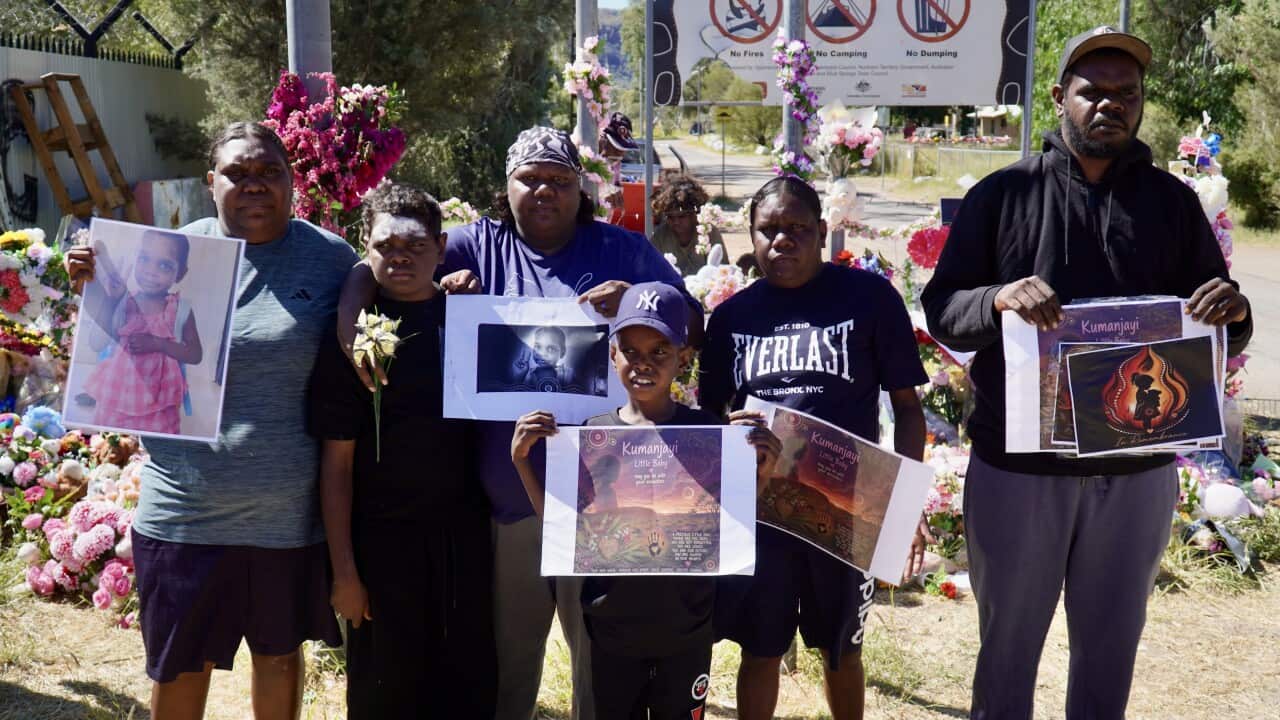
Meanwhile, the family of Kumanjayi Little Baby remains trapped at the center of the storm.
During a tribute in the Senate, Indigenous Australians Minister Malarndirri McCarthy shared heartbreaking words from the girl’s mother.
She described her daughter as a little “princess” who loved the color pink, cuddling puppies, and watching Bluey.
The mother said her heart had been shattered into “eight million pieces.”
Those words cut through the political warfare for a brief moment and reminded Australians that behind every headline, every speech, and every argument stood a little girl whose life ended far too soon.
But even that moment of unity did not last.
Online debate became increasingly vicious.
Some accused Parliament of caring more about ideological battles than the safety of children.
Others warned that Indigenous grief was once again being turned into national spectacle.
And through it all, one haunting question continues to grow louder across Australia:
If politicians cannot even agree on why these tragedies keep happening… how can they possibly stop the next one?