PC ANDREW HARPER’S WIDOW THOUGHT HER HUSBAND WAS COMING HOME THAT NIGHT UNTIL TWO POLICE OFFICERS APPEARED AT HER DOOR WITH THE NEWS THAT CHANGED EVERYTHING Lissie Harper had been married to Andrew for just four weeks when officers arrived to tell her the young policeman had been k̸i̸l̸l̸e̸d̸ after being dragged behind a car for more than a mile while responding to a burglary call. Seven years later, the grief has never truly left, and the possibility that two of his k̸i̸l̸l̸e̸r̸s̸ could soon walk free has reopened the wounds his family and colleagues have spent years trying to heal.

Nearly seven years after PC Andrew Harper was killed while responding to a burglary call, his widow Lissie Harper is once again facing the painful prospect of seeing the men convicted over his death released from prison early.
For Lissie, the story began with a knock on the door on the night of August 15, 2019.
She believed her husband was coming home from work.

Instead, uniformed police officers stood outside with news that would permanently alter her life.




Andrew had been killed while on duty, just four weeks after the couple married.
“Everything I had known in my life to be true was robbed away,” Lissie later said. “Every ounce of beautiful peace, gone.”
The couple had known each other since they were teenagers and had spent 13 years together before their wedding.
They had been childhood sweethearts, and Lissie later remembered Andrew passing handwritten notes to her during school.
In her eulogy, she described them as “true childhood sweethearts, loving one another more and more with each passing day.”
They had been preparing to begin married life together and were about to go on their honeymoon.
Instead, Lissie was suddenly planning a funeral.
Now, years later, the case has returned to the center of a national debate over Britain’s overcrowded prisons and the Government’s plans to release thousands of prisoners earlier than originally expected.
Two of the men convicted over Harper’s death, Albert Bowers and Jessie Cole, are eligible for early release under the current arrangements.
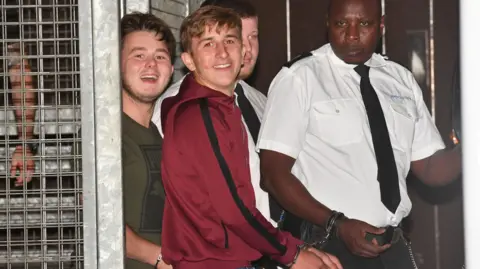
Their potential release has reopened wounds for Harper’s family, colleagues and supporters who believed the sentence imposed after his death should mean that the men remained behind bars for longer.
PC Harper’s death shocked the country because of the circumstances surrounding it.
The 28-year-old officer had been nearing the end of his shift when he and a colleague were called to investigate reports of a burglary in Berkshire.
The suspects were fleeing in a car that was towing a stolen quad bike.
Harper pursued the vehicle along a dark country road.
During the confrontation, his ankles became caught in a strap attached to the vehicle.
The car continued moving, dragging the officer behind it for more than a mile.
He eventually died on the road.
His police badge and protective vest were found scattered along the route, stark reminders of the violence of the incident.
During the 2020 trial at the Old Bailey, jurors were shown haunting dashcam footage from the police vehicle.
The footage captured the moment Harper confronted the teenagers before he disappeared from view.
The prosecution described Harper as an officer who was “going beyond the call of duty.”
Henry Long, who was driving the vehicle, had already pleaded guilty to manslaughter.
Bowers and Cole were tried for murder, but the jury ultimately convicted both of manslaughter.
The verdict meant jurors were not satisfied beyond the required legal standard that the teenagers knew Harper was being dragged behind the vehicle.
Even so, the seriousness of the crime was emphasized by the judge.
Mr Justice Edis described it as a manslaughter case that was “very close to a case of murder” in terms of its seriousness.
Long was sentenced to 16 years in prison.
Bowers and Cole each received 13-year sentences.
The court also heard disturbing evidence about the defendants’ behavior.
There were moments during the trial when the teenagers laughed and joked.
They were also seen laughing after one of their early court appearances.
The judge later rejected suggestions that their behavior demonstrated anything resembling genuine remorse.
For Harper’s family, those images became part of an already unbearable memory.
His death had turned a young newlywed’s life into a national tragedy almost overnight.
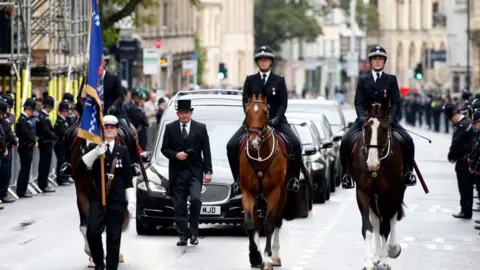
Photographs from Andrew and Lissie’s wedding appeared across newspapers.
Police forces paid tribute to him.
Football clubs held minutes of silence.
Blue ribbons appeared in his hometown of Wallingford.
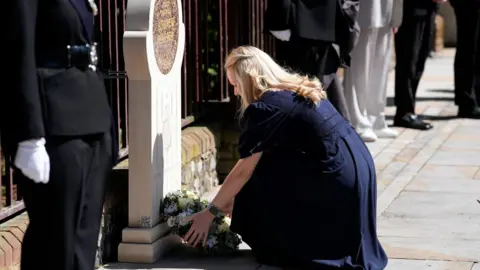
His mother, Debbie Adlam, spoke of being deeply moved by the enormous public response following her son’s death.
But grief eventually became a campaign for change.
Lissie was disappointed by the sentences handed down to those responsible for Andrew’s death and decided that she would use her experience to push for tougher protections for emergency workers.
She began speaking publicly about what had happened.
Although softly spoken, she repeatedly appeared in television and radio interviews, explaining why she believed the law needed to change.
Her campaign ultimately resulted in Harper’s Law.
The legislation introduced a mandatory life sentence for anyone convicted of killing an emergency worker while committing a crime, subject to the legal conditions of the law.
The campaign also ensured that Andrew’s name remained connected to the wider debate about sentencing and protection for police officers.
For Lissie, the fight was never simply about one sentence.
She said she wanted to help prevent other families from experiencing what hers had endured.
That history is now colliding with the Government’s attempt to address Britain’s prison capacity crisis.
Thousands of prisoners are expected to become eligible for early release under changes designed to reduce pressure on overcrowded prisons.
The policy has generated widespread anger, particularly when it became clear that some offenders convicted of serious crimes could qualify.
Bowers and Cole’s eligibility has become one of the most controversial examples.
A petition opposing their release has attracted more than 750,000 signatures, reflecting the strength of public feeling surrounding Harper’s case.
Lissie has described the decision as “disgraceful and disgusting.”
Andrew’s mother has also said she was devastated.
The anger is not limited to Harper’s family.
Police representatives have argued that allowing his killers to leave prison early sends the wrong message to officers who continue to put themselves in danger every day.

Tiffany Lynch, chair of the National Police Federation of England and Wales, said the issue “feels personal” to rank-and-file officers.
She pointed to the fact that Harper was only four weeks into his marriage when he died.
“He was dedicated to his job,” she said, emphasizing that he was doing what members of the public expect police officers to do when he responded to the burglary call.
The possibility of early release has also raised concerns about police morale.
Stuart Blaik, the senior investigating officer who worked on Harper’s case, said the decision was particularly difficult to understand and could affect officers across the country.
The emotional impact is heightened by the timing.
The next anniversary of Harper’s death will mark seven years since his life ended on that Berkshire road.
Seven years is almost the length of time that Lissie and Andrew were together before their wedding.
She had only four weeks as his wife.
Yet those four weeks became the beginning of a lifetime spent carrying his memory.
The years since Andrew’s death have been filled with grief, campaigning and public scrutiny.
Lissie has repeatedly returned to the same central idea: that Andrew’s life should not be reduced to the circumstances of his death.
To her, he was the boy who passed notes in class.
He was the teenager she grew up with.
He was the husband who had just promised to share a future with her.
And he was the police officer who wore his uniform with pride.
His family has continued to describe him as a gentle man who treasured those closest to him.
The current prison debate has therefore reopened something that never truly disappeared.
For the Harper family, the issue is not simply about prison numbers or administrative policy.
It is about what Andrew’s sentence meant, what his death meant and whether the punishment imposed after his killing should be changed years later because of pressure on the prison system.
Government officials have argued that overcrowding has created an urgent problem that cannot be ignored.
Justice Secretary Alex Norris has apologized to victims and their families while warning about the need to prevent a prison capacity crisis.
But critics say solving overcrowding cannot come at the expense of victims who were promised justice.
That argument has made Harper’s case a symbol of the wider dispute.
Nearly seven years after the knock that shattered her life, Lissie Harper is once again being forced to relive the circumstances of Andrew’s death.
She has spent those years fighting in his name.
And beneath the politics, petitions and arguments about prison capacity remains the memory she described in her eulogy: a childhood sweetheart who became her husband, a police officer who died doing his job and a man whose life together with Lissie ended almost as soon as it began.
For his family, the fight is still not over.
And for Lissie, the question remains painfully simple: after everything Andrew gave in the line of duty, should the men convicted over his death really be allowed to walk free before completing the sentences they were given?