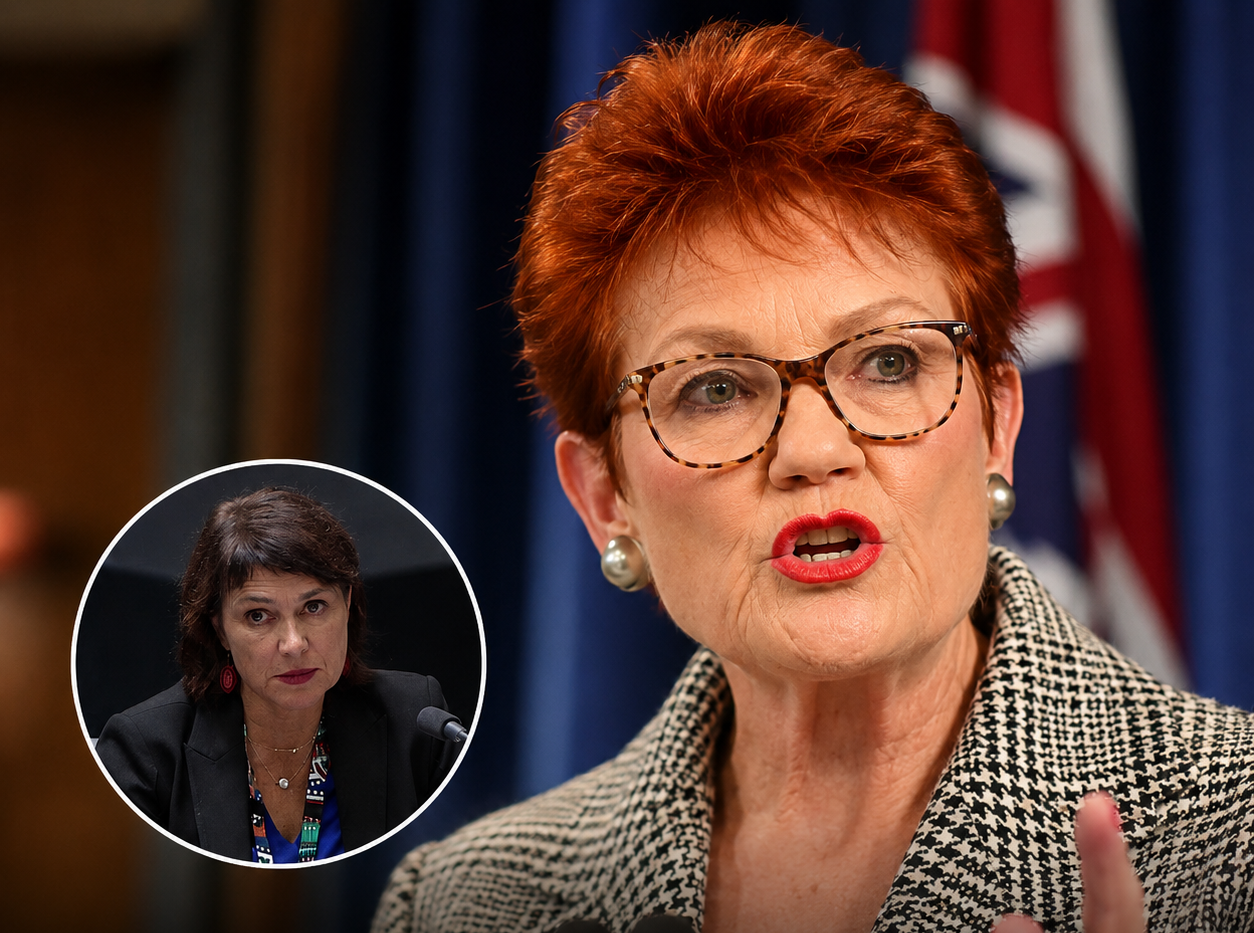
Pauline Hanson Calls For A ‘Monocultural’ Australia In Explosive National Press Club Speech
Pauline Hanson has ignited fresh debate across Australia after declaring the country should become a “monocultural” society rather than continue embracing multiculturalism.
The One Nation leader made the comments during her first-ever address to the National Press Club, where she outlined a sweeping vision for Australia’s future and argued that current immigration policies had contributed to social division, housing pressures and a weakening sense of national identity.
The remarks quickly became one of the most discussed moments of the speech and sparked immediate reaction from supporters, critics and political opponents.
For Hanson, however, the message was simple.
She believes Australia needs a stronger common culture and a greater emphasis on shared values rather than encouraging separate cultural identities.



Addressing the audience in Canberra, Hanson argued that multiculturalism had failed to deliver the unity that many Australians expected.
She said governments had spent decades encouraging communities to maintain distinct cultural identities while paying insufficient attention to building a stronger shared national culture.
According to Hanson, that approach has weakened social cohesion and created unnecessary divisions.
Her solution is what she describes as a monocultural Australia.
Hanson said this does not mean people should abandon their heritage or family traditions.
Instead, she argued that all Australians should identify first and foremost with a common national culture built around Australian institutions, values and traditions.
The concept immediately attracted attention because it challenges one of the core principles that has shaped modern Australia for decades.
Multiculturalism has long been promoted by successive governments as a way of encouraging social harmony while recognising the diverse backgrounds of Australia’s population.
Hanson disagrees with that approach.
She told the National Press Club that multiculturalism places too much emphasis on differences between groups rather than what Australians have in common.
She argued that national unity should take precedence over cultural separation.
The comments were closely linked to her broader criticism of immigration policy.
Throughout the speech, Hanson repeatedly claimed Australia was experiencing an immigration crisis.
She argued that high migration levels had increased pressure on housing, infrastructure and public services while also making it harder to maintain a cohesive national identity.
Housing affordability featured heavily in her argument.
Hanson said many Australians feel locked out of the housing market and believe population growth is occurring faster than homes can be built.
She claimed governments had failed to properly align migration levels with housing supply.
Supporters of her position argue that rapid population growth has contributed to rising housing costs and stretched infrastructure.
Critics counter that housing shortages are driven by a range of factors including planning restrictions, construction costs and insufficient supply.
The speech extended beyond immigration and multiculturalism.
Hanson also criticised aspects of government spending, climate policy, public broadcasting and what she described as ideological activism within public institutions.
Those comments reinforced the broader political message she sought to deliver.
The event itself was highly charged.
A protest banner briefly interrupted proceedings, while journalists pressed Hanson on a variety of controversial policy positions during the question-and-answer session.
The exchanges generated significant media attention and ensured the speech dominated political discussion throughout the day.
For supporters, Hanson was giving voice to concerns that many Australians feel are ignored by the political establishment.
They argue that questions about immigration, cultural integration and national identity deserve open discussion.
For opponents, however, the speech represented an attempt to divide Australians by framing diversity as a problem rather than a strength.
Several critics accused Hanson of oversimplifying complex social and economic challenges.
Others argued that multiculturalism has helped Australia become one of the world’s most successful and diverse democracies.
The debate highlights a growing divide in Australian politics.
Issues that were once considered fringe topics are increasingly moving into the political mainstream as voters focus on housing affordability, cost-of-living pressures and migration levels.
That shift has helped smaller parties attract greater attention and influence national conversations.
For One Nation, the speech represented an opportunity to place those issues firmly at the centre of public debate.
Whether Australians agree with Hanson or not, her remarks ensured that immigration, identity and multiculturalism remain major political topics.
As pressure continues to build around housing and population growth, the arguments raised during the National Press Club address are likely to remain part of Australia’s political conversation for some time yet.