ONE NATION PUSHES FOR ACTIVIST GROUP BAN — A NEW POLITICAL BATTLE IS EMERGING IN AUSTRALIA–
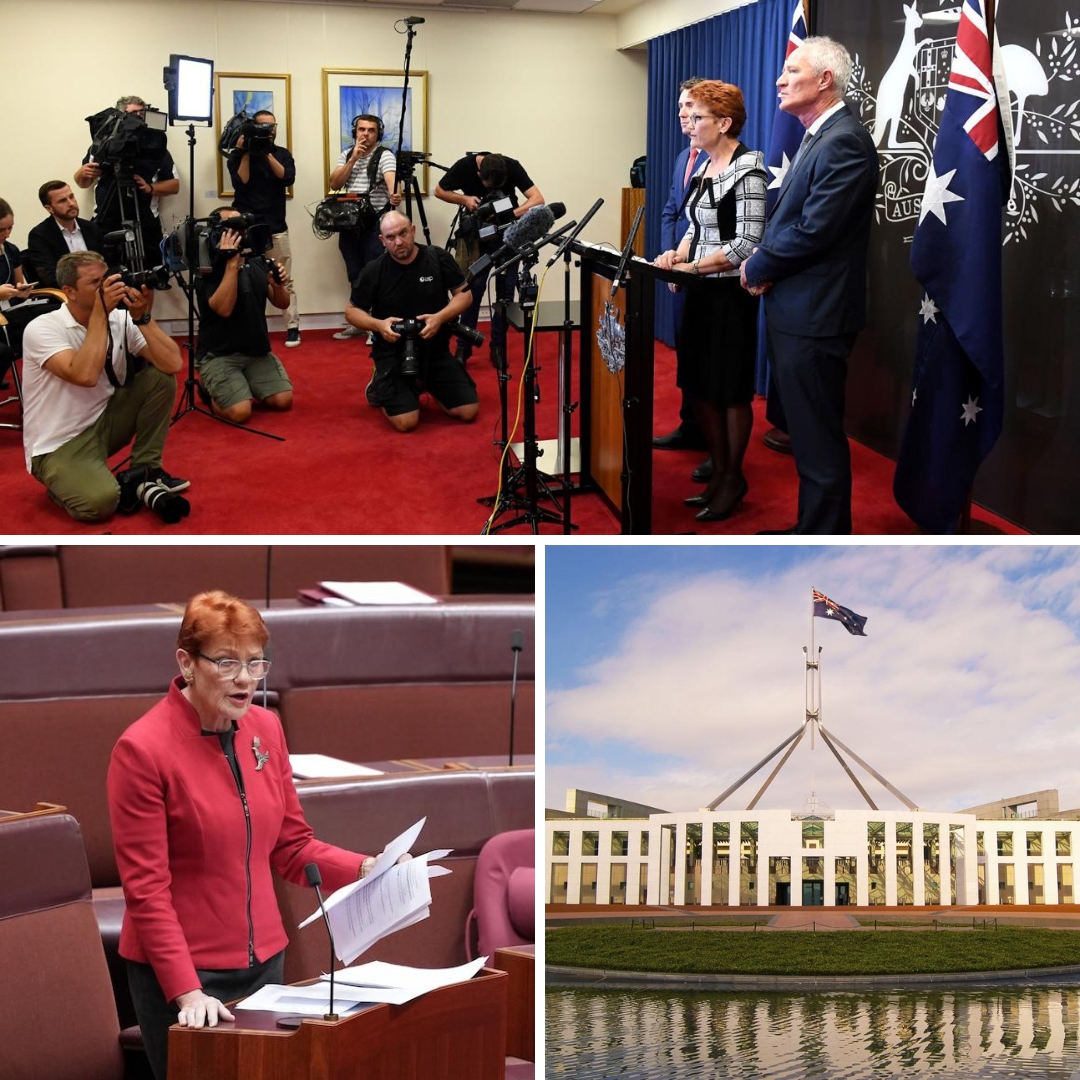 ONE NATION PUSHES FOR ACTIVIST GROUP BAN — A NEW POLITICAL BATTLE IS EMERGING IN AUSTRALIA

Australia’s political debate has taken another dramatic turn after Pauline Hanson and her One Nation party called for a ban on the activist organization GetUp!, arguing that growing concerns surrounding political activism, campaign tactics, and public safety can no longer be ignored.
The proposal has immediately sparked nationwide discussion.
Supporters describe it as a necessary response to what they see as increasingly aggressive political activism.
Critics have condemned the idea as an attack on democratic participation and freedom of political expression.
Political observers, meanwhile, believe the controversy could become one of the most closely watched debates in the lead-up to future elections.




What began as a single policy proposal is rapidly evolving into something much larger.
A national conversation about the limits of activism, the role of political advocacy groups, and who gets to influence Australian democracy.
And judging by the intensity of reactions already emerging, neither side appears willing to back down.


For years, GetUp! has been one of Australia’s most visible political activist organizations.
The group has participated in campaigns involving climate policy, healthcare, social issues, environmental protection, workers’ rights, government accountability, and election-related advocacy.
Supporters view the organization as an important part of Australia’s democratic landscape.
They argue that activist groups help mobilize citizens, increase public engagement, and hold governments accountable.
Opponents see something very different.
Critics have long accused the organization of acting as a highly partisan political machine rather than a neutral advocacy group.
Some argue that its influence extends far beyond ordinary activism and that its campaigns increasingly shape electoral outcomes.
These disagreements have existed for years.
But One Nation’s latest proposal has pushed them directly into the national spotlight.
According to Hanson and her supporters, the issue is not merely about political disagreement.
They argue that concerns regarding campaign conduct, activist tactics, and public safety have reached a level that requires stronger government scrutiny.
One Nation representatives claim that some activist organizations have become increasingly aggressive in their methods, creating environments that discourage open political discussion rather than encouraging it.
Their argument is simple.
Democracy functions best when citizens can express their views freely without intimidation or pressure.
If activist groups are perceived as crossing that line, they argue, governments have a responsibility to respond.
Supporters of the proposal believe many Australians share those concerns.
The announcement comes at a time when Australia’s political environment is becoming increasingly polarized.
Issues such as immigration, housing affordability, energy policy, climate change, cost-of-living pressures, and government spending continue generating fierce public debate.
Political activism has become more visible.
Social media has amplified campaigns dramatically.
And advocacy groups across the ideological spectrum now play larger roles in shaping public discussion.
As a result, questions about political influence are attracting greater attention.
Who shapes public opinion?
Who funds political campaigns?
And how much influence should activist organizations possess?
These questions sit at the heart of the current controversy.


Critics of One Nation’s proposal argue that banning activist organizations would create serious concerns of its own.
They warn that democratic societies depend on robust political participation.
Community organizations.
Advocacy groups.
Campaign movements.
And civil society institutions all contribute to public debate.
Restricting those activities, they argue, could establish dangerous precedents.
Many opponents also note that political advocacy occurs across the ideological spectrum.
Conservative organizations.
Business groups.
Trade unions.
Environmental movements.
And community associations all seek to influence policy.
Critics therefore question why one particular organization should be singled out.
These arguments have quickly become central to the debate.
Supporters of Hanson reject those criticisms.
They argue that the proposal is not about suppressing legitimate political participation.
Instead, they insist it is about accountability and transparency.
Many believe activist groups should face the same scrutiny as political parties and major campaign organizations.
Others argue that concerns about political influence should be addressed regardless of ideological orientation.
In their view, protecting democratic processes requires clear rules that apply equally to everyone.
Whether voters agree with that interpretation remains uncertain.
But it is clearly resonating with a segment of the electorate already frustrated with political institutions.
The broader political significance may extend beyond GetUp! itself.
One Nation has increasingly positioned itself as a challenger to what it describes as an entrenched political establishment.
The party frequently argues that major institutions—political, bureaucratic, media, and activist—exercise disproportionate influence over public debate.
By targeting a well-known activist organization, Hanson is reinforcing that broader narrative.
Her supporters see it as evidence that she is willing to confront powerful interests.
Her opponents see it as another example of political confrontation designed to generate headlines.
Either way, the strategy ensures attention.
And attention is something the proposal has certainly received.


Political analysts note that the timing is particularly important.
Recent polling has shown increasing volatility within Australian politics.
Voters appear more willing to abandon traditional loyalties.
Minor parties are attracting greater support.
And dissatisfaction with major parties remains widespread.
In that environment, proposals that challenge established institutions often gain traction.
Whether they ultimately succeed is another question.
But they tend to resonate with voters who already feel disconnected from the political system.
One Nation appears determined to capitalize on that sentiment.
The proposal also raises practical questions.
Could such a ban actually be implemented?
What legal standards would apply?
How would governments distinguish between acceptable advocacy and unacceptable activism?
Would similar standards apply to other political organizations?
These questions remain largely unanswered.
Legal experts are already debating whether such measures would survive constitutional scrutiny.
Political opponents are demanding greater detail.
And supporters are pressing for further action.
As the debate develops, these practical considerations are likely to become increasingly important.
For now, however, the political impact is already visible.
The announcement has reignited national discussion about activism, political influence, and democratic accountability.
It has reinforced One Nation’s image as a party willing to challenge established institutions.
And it has forced political opponents to respond.
Whether the proposal ever becomes reality remains uncertain.
Whether it receives broader political support remains unknown.
But one thing is becoming increasingly clear.
This debate is no longer simply about a single activist group.
It is about competing visions of how Australian democracy should function, who should influence it, and where the boundaries of political activism should be drawn.
And as Australia moves closer to future electoral contests, those questions are likely to become even more politically significant.
Because while the proposal itself remains controversial, the issues it raises are not disappearing.
If anything, they are becoming more central to Australia’s political future with each passing day.