Nicki Chapman Reveals Heartbreaking Moment She Collapsed in Tears After Doctors Found Golf-Ball-Sized Brain Tumour
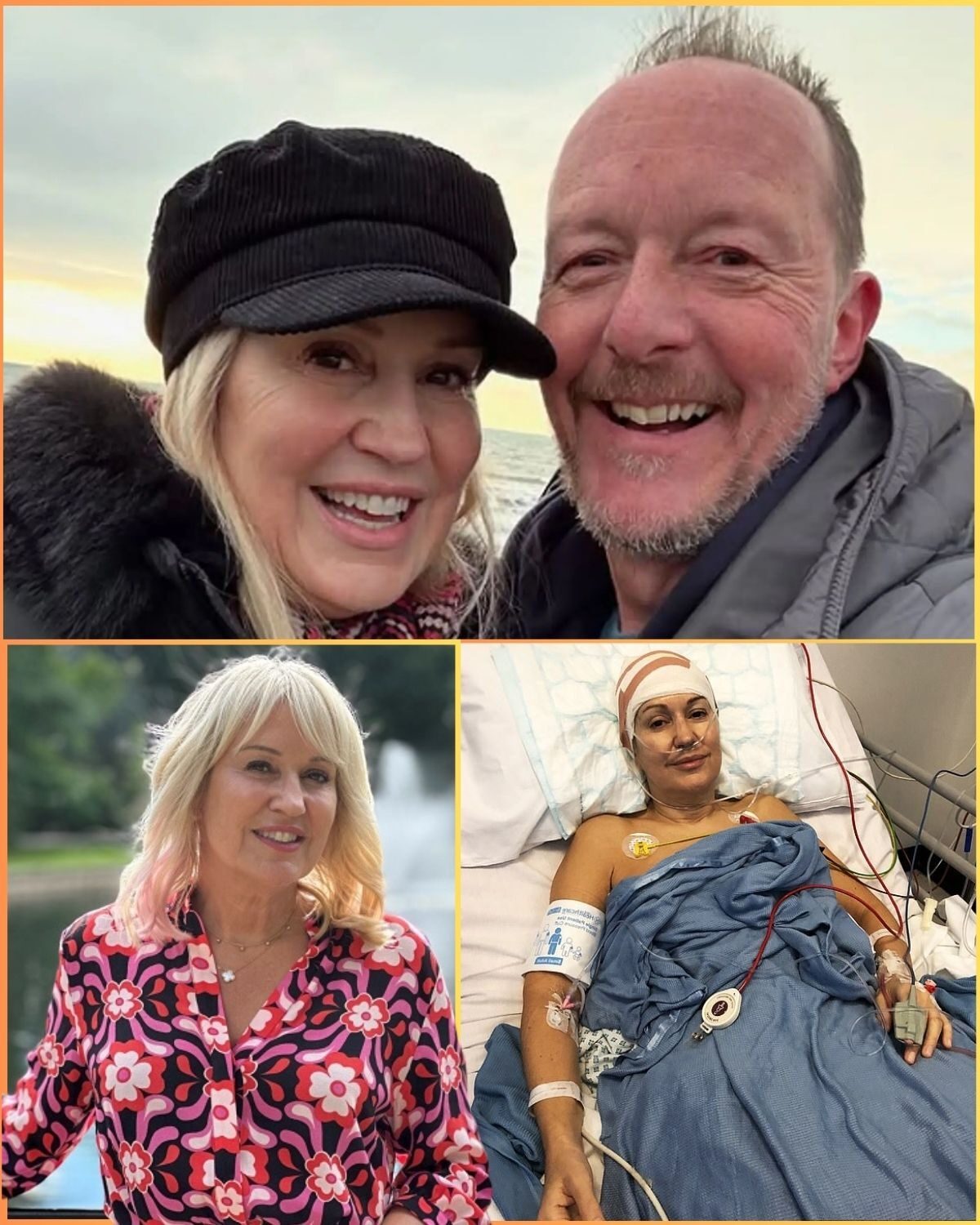
💔 NICKI CHAPMAN’S BRAIN-TUMOUR CONFESSION: She collapsed sobbing after doctors found a golf-ball-sized mass — but what she still struggles with seven years later is deeply revealing
Nicki Chapman has spent years rebuilding her life after doctors discovered a brain tumour the size of a golf ball. The Escape to the Country favourite remembers being reduced to tears when the devastating diagnosis finally sank in. Surgery saved her from a frightening situation — but seven years later, Chapman has revealed that the operation left behind one subtle change that still follows her into the television studio.
For viewers, Nicki Chapman has long been one of British television’s most reassuring faces.
She has guided families through dream property searches on Escape to the Country, judged aspiring singers on Pop Idol and built a broadcasting career after years working behind the scenes in the music industry.



But in 2019, her own life suddenly became far more frightening than anything she had ever faced professionally.
It began with symptoms she could not explain
Chapman was recovering from knee surgery in May 2019 when she experienced a series of sudden neurological symptoms.
Her vision changed.
Her speech became affected.
At times, she struggled to read and process words normally.
Doctors initially considered the possibility that she had suffered a stroke. Scans then revealed something completely unexpected: a golf-ball-sized meningioma, a type of brain tumour.
The tumour was non-cancerous.
But “benign” did not mean harmless.
It was pressing on her brain and doctors told her surgery would be needed.

Then the shock finally hit her
Chapman has since spoken about the emotional impact of receiving that diagnosis.
She recalled ending up on her hands and knees, sobbing and simply wanting the tumour gone.
For somebody accustomed to remaining calm and professional in public, the moment stripped everything else away.
And she later explained that there was a second emotional blow waiting for her.
Telling other people.
The Brain Tumour Charity, which Chapman now supports, records her describing the shock of informing family and friends as almost another trauma in itself — like being hit all over again.
Suddenly, she was not simply dealing with her own fear.
She had to watch that fear appear on the faces of the people who loved her.
A four-and-a-half-hour operation followed
Chapman underwent surgery at Charing Cross Hospital in London.
The operation lasted approximately four and a half hours. At the time, she praised the NHS care she received and later described how remarkably well she felt during her early recovery.
The experience had been serious enough that, before surgery, she even discussed resuscitation wishes with doctors if something went catastrophically wrong.
Thankfully, the operation was successful.
The woman who had suddenly been unable to trust her own vision and speech was able to return to her life and eventually to television.
But recovery did not mean everything went back exactly to how it had been before.
Seven years later, one effect remains
In a 2026 interview, Chapman revealed that she still notices changes in the way she processes information.
Reading is harder.
Concentration takes more effort.
Learning scripts can take longer.
And retaining information no longer feels quite as effortless as it once did.
For a television presenter, those changes are particularly significant.
Her job depends on absorbing information, remembering lines and communicating naturally in front of a camera.
Tasks that once happened almost automatically may now require more concentration.
But Chapman has framed that change with characteristic perspective.
Compared with the alternative, she regards it as a small price to pay for still being here.
She once thought the symptoms might be something far less serious
Looking back, Chapman has described how easy it was to explain away some of the early warning signs.
Tiredness.
Forgetfulness.
Difficulty finding words.
She initially wondered whether menopause, exhaustion or even migraine might explain what was happening.
Then the symptoms became impossible to ignore.
At one point, she struggled to say “Dubai” even though she could picture the word in her mind. On another occasion, she could not recall the name of an Escape to the Country executive producer she had known for years.
What initially seemed like a collection of strange, disconnected moments was actually her brain signalling that something was wrong.
“If my time was up…”
The diagnosis also forced Chapman to confront mortality in a way she never expected.
Years later, she said that during the darkest period she reached a point of acceptance: if her time was over, she knew she had already lived a wonderful life.
But if she survived?
She intended to make the life ahead of her even better.
That experience changed her perspective without becoming the only thing that defined her.
Chapman has spoken about mentally placing the tumour experience in a kind of filing cabinet — acknowledging that it will always exist as part of her story without allowing herself to reopen that painful file every day.
She refused to let the diagnosis become her identity
Chapman returned to broadcasting and continued working across television and radio.
She remains associated with Escape to the Country and has also continued her radio work, while using her public profile to support people affected by brain tumours.
The Brain Tumour Charity lists her among its high-profile supporters and notes her continued work raising awareness and campaigning for better support for patients.
That gives her story another dimension.
The diagnosis that once left her sobbing on the floor eventually became something she could use to help somebody else feel less alone.
Her career had already survived several reinventions
Long before her health scare, Chapman had built an unusual career.
She worked in the music business with major artists and became closely associated with the era of the Spice Girls, Take That and other huge acts before stepping unexpectedly in front of the television cameras.
Her breakthrough as an on-screen personality came through talent television, including Popstars and Pop Idol.
Later, Escape to the Country introduced her to another enormous audience.
She had already reinvented herself professionally more than once.
But brain surgery demanded a different kind of reinvention.
This time, she had to learn what her own mind and body could do after a major medical event.
The tumour was non-cancerous — but the fear was very real
The word “non-cancerous” can sound reassuring.
And medically, it was obviously significant that Chapman was not facing a malignant brain cancer.
Yet her experience illustrates why the emotional impact of a benign brain tumour should not be underestimated.
A meningioma can still affect the brain depending on its size and location, and Chapman’s own tumour had already been associated with vision, speech and cognitive problems before surgery.
For her, the diagnosis was not theoretical.
Something the size of a golf ball was inside her head.
And doctors needed to operate.
Now the smallest struggles carry the biggest perspective
Seven years later, Chapman is still working.
Still presenting.
Still learning scripts.
Just sometimes more slowly than before.
And perhaps that is the most powerful part of her story.
The shocking moment was discovering the tumour.
The terrifying moment was going into surgery.
But the real aftermath is quieter.
It is opening a script and needing longer to remember it.
Reading a page and having to concentrate harder.
Recognising that something you once did instinctively now takes effort.
And then doing it anyway.
Nicki Chapman once collapsed in tears because all she wanted was for the tumour inside her head to disappear. Seven years later, the tumour no longer dominates her life — but the small changes it left behind remind her every day of just how close she came to having an entirely different future.