“IT IS MADNESS TO KEEP LETTING PEOPLE IN…” — SKY NEWS COMMENT IGNITES NATIONAL FURY OVER AUSTRALIA’S HOUSING COLLAPSE AND WHO IS REALLY RESPONSIBLE

A sharp on-air commentary from Sky News host Danica De Giorgio has triggered one of the most heated debates in Australia’s ongoing housing crisis, with her remarks linking record migration levels to the country’s worsening affordability pressures and limited rental supply.
Her statement has since been widely shared across social media, dividing public opinion and reigniting a long-running political argument over whether immigration levels or housing policy failure is the primary driver of the crisis.
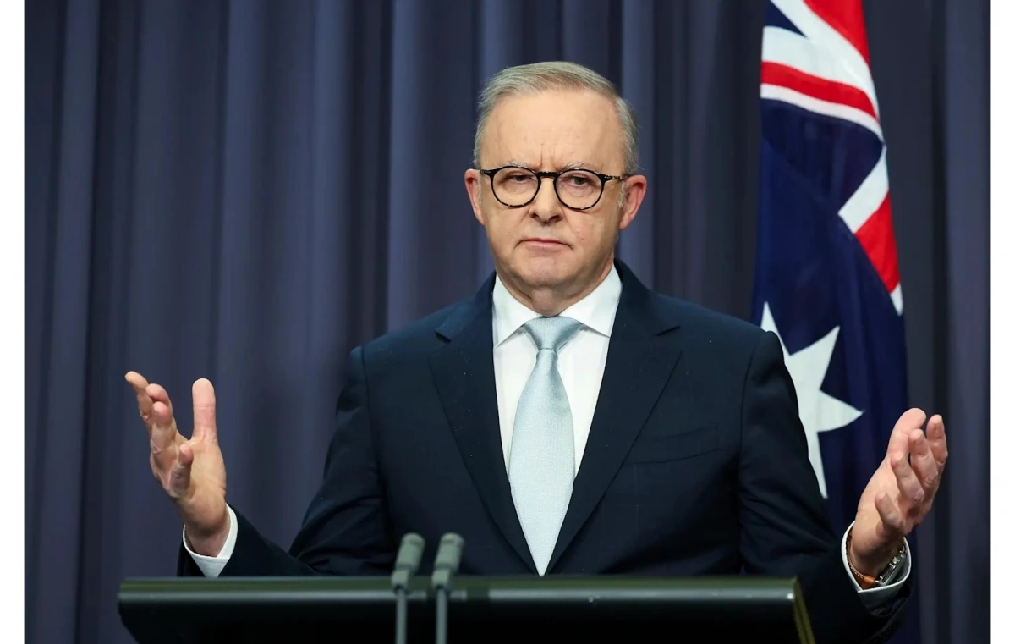
Speaking on-air, De Giorgio did not hold back in her assessment of the situation unfolding across major Australian cities.




“It is madness to keep letting people in, to keep the doors open — until we fix the housing crisis, get Aussies into homes, and make it more affordable to do so,” she said.
Her comments immediately struck a nerve in a country where housing affordability has become one of the most pressing economic and social issues.
She went further, pointing to what she described as a widening gap between population growth and construction output.
“Australia’s population is growing three times faster than new housing is being built — due to record levels of migration and sluggish home construction,” she added.
The remarks quickly spread online, where they were met with both strong support and sharp criticism from different sides of the political spectrum.
Supporters of her view argue that the country is failing to match infrastructure and housing supply with population demand, placing unsustainable pressure on renters and first-home buyers.
Critics, however, argue that blaming migration oversimplifies a far more complex issue involving planning approvals, construction bottlenecks, labour shortages, and decades of underinvestment in housing supply.
The debate intensified further when De Giorgio described the situation as a failure of leadership.
“It’s sloppy politics,” she concluded, a phrase that has since been repeated widely in commentary threads and political discussions.
For many viewers, the blunt tone of the remarks reflected growing frustration among Australians struggling with rising rents and property prices that have surged in recent years.

In Sydney, Melbourne, and Brisbane, rental vacancies remain historically tight, with competition for properties driving prices to record highs in many suburbs.
Young Australians in particular have expressed increasing concern that home ownership is becoming increasingly out of reach, even for those on stable incomes.
At the same time, economists have repeatedly warned that Australia’s housing shortage is the result of long-term structural issues rather than a single policy lever.
These include zoning restrictions, slow approval processes, rising construction costs, and delays in delivering large-scale housing developments.
Government officials have also pointed to skilled labour shortages in the construction sector as a key factor limiting how quickly new homes can be built.
Migration, however, remains one of the most politically sensitive aspects of the debate.
Australia has experienced strong population growth in recent years, driven in part by post-pandemic migration recovery and international student inflows.
While this has supported economic growth and labour markets, it has also added pressure to already strained housing supply chains.
The result is a politically charged conversation that often pits economic growth arguments against affordability concerns.
De Giorgio’s comments have now become part of that broader national argument, with politicians and commentators weighing in from all sides.
Some argue her remarks highlight a reality that policymakers are reluctant to confront directly, while others warn against framing migration as the primary cause of a complex housing system failure.
As the debate continues, the housing crisis shows no sign of easing in the short term.
Construction pipelines remain under pressure, interest rates have affected borrowing capacity, and demand continues to outpace supply in key urban areas.
For everyday Australians, the debate is no longer theoretical — it is reflected in weekly rent increases, competitive inspections, and delayed home ownership dreams.
Whether the solution lies in migration settings, planning reform, or large-scale housing investment remains fiercely contested.
But what is clear is that De Giorgio’s comments have struck a national nerve, forcing the issue back into the centre of political and public discussion.
👉 The question now dominating the conversation is simple: is Australia facing a migration problem, a housing supply failure — or a combination of both that no one is fully addressing yet?