Andrew Hastie Accuses Pauline Hanson Of Putting ‘MAGA First’ Instead Of Australia
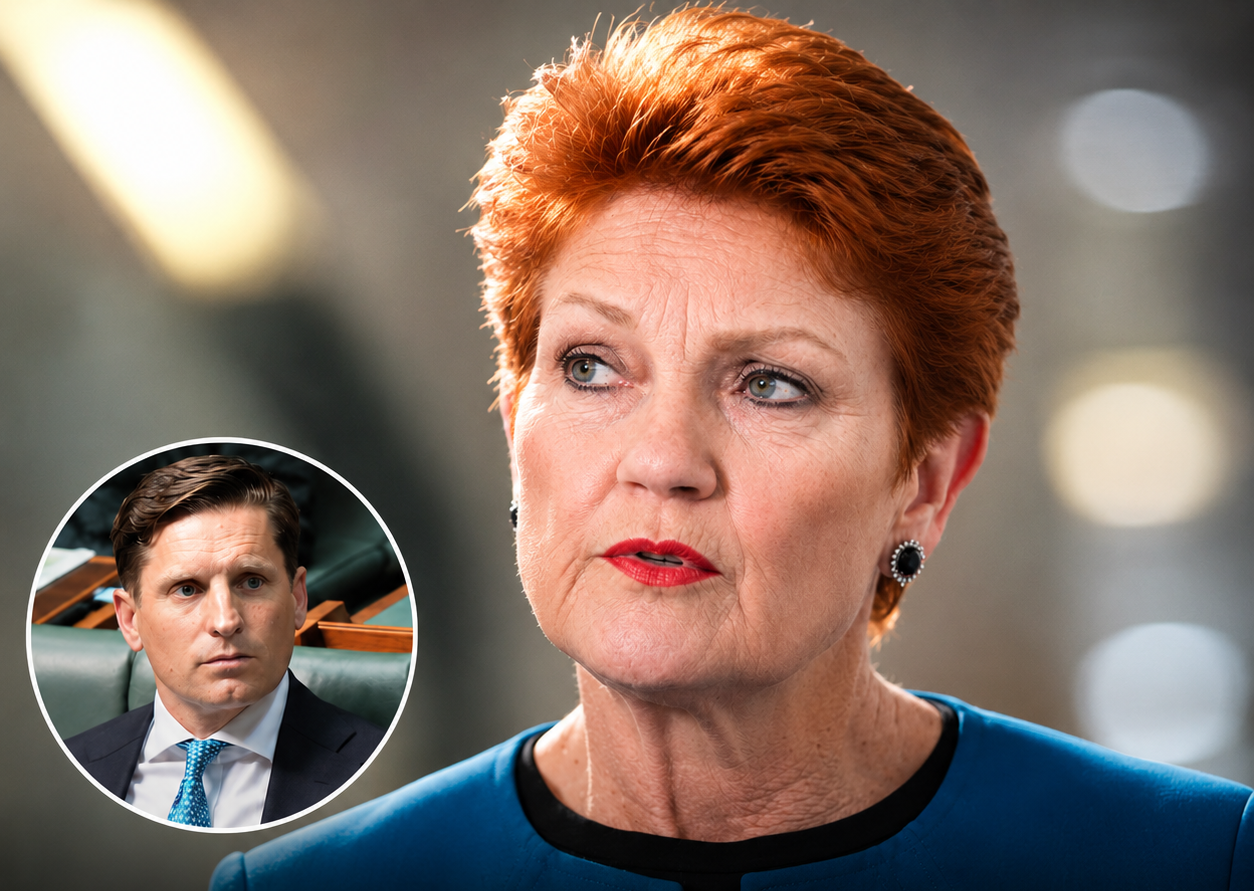 Andrew Hastie Accuses Pauline Hanson Of Putting ‘MAGA First’ Instead Of Australia
A fresh political battle has erupted on Australia’s conservative side of politics after Liberal MP Andrew Hastie accused Pauline Hanson of putting a “MAGA First” worldview ahead of Australia’s national interests.
The comments have triggered a new round of debate about the growing influence of Donald Trump-style politics in Australia and whether One Nation’s success is increasingly tied to American conservative movements.
For Andrew Hastie, the issue is not simply about political branding.
He believes some of Hanson’s recent positions demonstrate a willingness to place ideological loyalty to the Trump movement above what is best for Australia.
The criticism comes at a time when One Nation is enjoying some of the strongest polling numbers in its modern history, creating fresh pressure on both Labor and the Coalition.





The dispute centres on Hanson’s enthusiastic support for former US President Donald Trump and her repeated praise for policies associated with the American “Make America Great Again” movement.
Hastie argued that Australia should always place its own interests first rather than adopting political positions based on what is popular within American conservative circles.
In comments that quickly attracted national attention, Hastie suggested Hanson had become too closely aligned with a MAGA worldview.
He pointed specifically to her support for Trump’s approach to international conflicts and foreign policy decisions.
According to Hastie, some of those policies have failed to deliver the outcomes promised by their supporters and should not be treated as a model for Australia.
The Liberal MP argued that Australia’s foreign policy should be driven by Australian interests, Australian security concerns and Australian strategic priorities.
He warned against importing American political culture into domestic debates without considering the significant differences between the two countries.
The attack was notable because it came from within the broader conservative side of politics rather than from Labor.
Traditionally, criticism of Hanson has come from political opponents on the left.
This time, however, one of the Liberal Party’s most prominent figures was openly challenging her approach.
That fact alone drew considerable attention.
Many observers interpreted the comments as evidence that the Coalition is becoming increasingly concerned about One Nation’s growing popularity.
Recent polling has shown Hanson attracting support from voters who were once reliable Coalition supporters.
For the Liberal Party, that trend presents a significant political challenge.
Every voter who moves from the Coalition to One Nation makes it harder for the Liberals and Nationals to rebuild their electoral position.
As a result, the battle for conservative voters is becoming more intense.
Hanson was quick to reject the criticism.
She defended her support for Trump and argued that many of his policies had delivered results that Australians should seriously examine.
Throughout her political career, Hanson has frequently pointed to international examples when advocating for tougher border controls, stronger law-and-order policies and greater national sovereignty.
Supporters argue she is simply willing to discuss ideas that mainstream politicians avoid.
Critics argue she often borrows political themes from overseas movements that do not fit Australia’s circumstances.
The disagreement highlights a larger question facing Australia’s conservative movement.
Should it remain focused on traditional Australian political priorities, or should it embrace elements of the political style that has emerged around Trump in the United States?
That debate has been simmering beneath the surface for years.
Now it is becoming increasingly visible.
Hastie’s comments suggest some Liberal figures are worried that strong identification with Trump could ultimately become a political liability.
Polling has repeatedly shown that Trump remains a highly polarising figure among Australian voters.
While he enjoys strong support from some conservatives, many Australians remain sceptical of American-style political culture and partisan conflict.
That concern appears to be part of Hastie’s argument.
Rather than fighting elections based on American political slogans, he believes Australia’s political parties should focus on local challenges such as economic growth, national security and cost-of-living pressures.
For Hanson, however, the calculation may be different.
One Nation has built much of its support by presenting itself as an outsider movement willing to challenge political conventions.
Supporters often see similarities between that approach and Trump’s success in the United States.
As One Nation’s popularity rises, clashes like this are likely to become more common.
The party is no longer a fringe force operating on the edge of Australian politics.
It is increasingly being treated as a serious competitor for conservative voters.
That reality helps explain why senior Liberal figures are paying closer attention to Hanson than they have in years.
The political stakes are substantial.
If One Nation continues attracting voters from the Coalition, it could reshape electoral contests across multiple states and federal seats.
For now, the dispute between Andrew Hastie and Pauline Hanson represents more than a personal disagreement.
It is part of a larger struggle over the future direction of Australia’s political right.
And with One Nation continuing to gain momentum, that battle is unlikely to fade anytime soon.