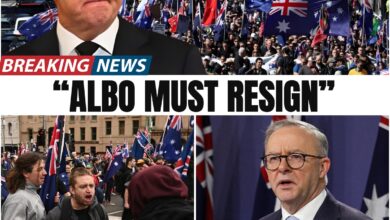
Albanese Government Accused of “Playing the Population for Mugs” Amid ISIS Brides Scandal

Albanese Government Accused of “Playing the Population for Mugs” Amid ISIS Brides Scandal
Political tensions are escalating as commentators accuse the Anthony Albanese government of misleading Australians over the potential return of women linked to Islamic State.
Over the weekend, reports revealed that discussions had been taking place for months between federal authorities and state governments in New South Wales and Victoria regarding possible repatriation. NSW Premier Chris Minns confirmed he had been briefed — intensifying pressure on Canberra.
Critics argue the Prime Minister can no longer maintain that his “hands are tied” when it comes to passports and assistance.
“Of course the federal government has known about this for a long time,” one political contributor said. “To suggest otherwise is to play the population for mugs.”
Under Australian law, passports can be cancelled or refused on security grounds — a point repeatedly raised by opponents of repatriation.




Leadership Under Fire
The Prime Minister has been accused of avoiding direct scrutiny rather than publicly defending the government’s legal position.
Commentators suggested previous leaders such as John Howard or Kim Beazley would have fronted the media to argue the case openly — outlining international law obligations and national security safeguards.
Instead, critics claim the government has relied on narrow legal framing while downplaying behind-the-scenes coordination.
Home Affairs Minister Tony Burke is also facing scrutiny over the government’s messaging.
Community Anger and Security Fears
Public reaction appears strong. Many Australians argue that the women made a conscious decision to travel to a war zone after Islamic State’s brutality was widely known.
Opposition Leader Angus Taylor has moved to draw a clear line, proposing measures to prevent their return and framing the issue as one of national safety.
Concerns have also been raised about radicalisation risks, particularly regarding children raised in extremist-controlled camps. Some critics argue reintegration could prove deeply challenging and potentially destabilising.
Others, however, stress that children did not choose their circumstances and should not be punished for their parents’ actions.
One Nation Surge and Coalition Strategy
The controversy is unfolding as Pauline Hanson’s One Nation records strong polling numbers in several states.
Analysts suggest that where Liberal oppositions fail to aggressively challenge Labor governments, protest votes are flowing toward One Nation.
Queensland’s political landscape, shaped by Premier David Crisafulli, is cited as an example of how decisive action on crime can blunt minor-party momentum.
Meanwhile, Angus Taylor’s early leadership moves — including plans to introduce legislation targeting ISIS-related returns — are being described by supporters as a strategic attempt to reclaim political ground.
Global Tensions Add to Uncertainty
Beyond domestic politics, rising tensions in the Middle East are compounding concerns.
Reports of increased U.S. military activity near Iran have prompted speculation about potential escalation. Former U.S. President Donald Trump and Israeli Prime Minister Benjamin Netanyahu have both taken hardline positions on Iran’s nuclear ambitions.
Observers warn that any significant military action could carry unpredictable regional consequences.
A Government Under Pressure
At the heart of the debate lies a core question:
Was the Australian public fully informed about the extent of planning regarding ISIS-linked returns — or has the government’s messaging failed to match reality?
With community anger running deep and Parliament set for further confrontation, the political stakes are rising fast.