“SWEDEN SLASHED ASYLUM MIGRATION — SO WHY CAN’T BRITAIN?” Swedish Minister Reveals the Tough Formula That Changed Everything… and One Detail Could Upend the UK’s ECHR Debate
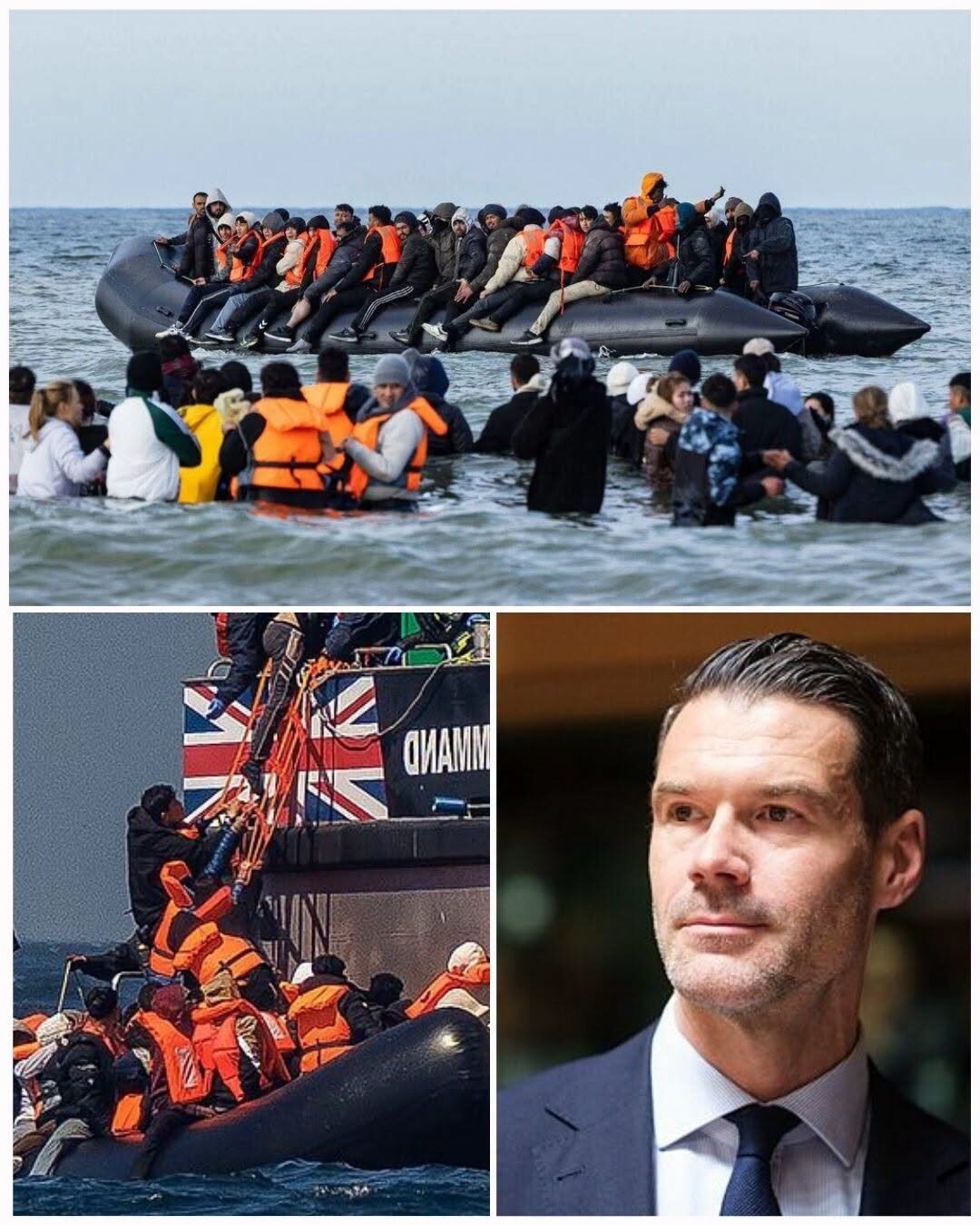
🚨 “SWEDEN SLASHED ASYLUM MIGRATION — SO WHY CAN’T BRITAIN?” Swedish Minister Reveals the Tough Formula That Changed Everything… and One Detail Could Upend the UK’s ECHR Debate
Sweden was once at the centre of Europe’s migration debate. Now asylum-related migration has fallen to levels not seen for decades — and the country’s migration minister has a blunt message for Britain: dramatic reductions are possible without abandoning international law or human rights obligations. But the measures behind Sweden’s turnaround go much further than one simple border crackdown.
Britain’s bitter argument over Channel crossings has taken an unexpected turn — and this time the example being held up comes from Sweden.
Swedish Migration Minister Johan Forssell says his country has demonstrated that asylum-related migration can be reduced sharply and relatively quickly while remaining within international legal obligations. Sweden’s own government says asylum immigration is now at its lowest level since 1985, while recent reporting projects roughly 4,200 asylum seekers in 2026, which would be the lowest annual figure since 1984.
And Forssell believes there are lessons Britain could take from that transformation.
But there is a catch.




Sweden did not achieve its reduction with one dramatic measure.
It changed almost everything at once.
Sweden’s message: there was no “silver bullet”
Forssell described Sweden’s approach as a systematic tightening of migration policy rather than one headline-grabbing intervention.
The government has pursued stricter asylum and immigration rules, strengthened returns policy, tightened requirements in several areas and significantly increased incentives for voluntary repatriation. It has also been moving away from high levels of asylum immigration while continuing to seek skilled workers, researchers and other international talent.
Recent reporting on Forssell’s comments highlights further elements of the Swedish approach: lower benefits for some migrants, stronger deportation policies for foreign criminals and greater use of reception centres for asylum seekers.
The result has been dramatic.
But Forssell’s most politically explosive point for Britain may not be the fall in asylum numbers itself.
It is how he says Sweden achieved it.
Then comes the remark Britain’s ECHR critics may not want to hear
A major part of Britain’s immigration debate revolves around the European Convention on Human Rights.
Reform UK and other critics of the existing system have argued that human-rights law can frustrate removals and make tougher border enforcement significantly harder.
Yet Forssell’s argument cuts across that narrative.
He says substantial reductions in asylum-related migration can be achieved while complying with international law and human rights obligations.
That does not mean Sweden’s system can simply be copied and pasted onto Britain.
The countries have different geography, legal arrangements, migration routes and political circumstances.
But Sweden’s experience raises an uncomfortable question at the heart of the British debate:
Is leaving the ECHR really the only route to radically lower numbers — or has Britain simply not yet adopted a sufficiently comprehensive set of domestic reforms?
Britain’s Channel problem has changed — but not disappeared
The picture in the Channel is also more complicated than some political rhetoric suggests.
Official Home Office figures show that 43,806 people were detected arriving in Britain through illegal routes in the year ending March 2026, with small boats accounting for around 90 per cent of those arrivals.
More recent figures indicate that crossings have fallen considerably during 2026. The Border Security Commander reported that arrivals in April, May and June were 44 per cent lower than during the equivalent period a year earlier.
By 10 August, reporting based on Home Office figures put the year-to-date small-boat total at around 14,819, roughly 43 per cent below the comparable point in 2025.
Yet another development has kept the issue politically explosive.
The boats are becoming dramatically more crowded.
230 people on ONE boat
On 10 August, 230 people arrived across the Channel aboard a single inflatable vessel — the largest number ever recorded on one small boat.
Earlier records of 165 and 128 people had already been set during the summer.
The growing use of what have been dubbed “mega-dinghies” appears to reflect changing tactics by smuggling networks as enforcement makes launches more difficult. Officials have warned that packing ever larger numbers of people onto unseaworthy craft creates an obvious and potentially deadly safety risk.
So while the overall number of crossings has fallen, the spectacle of hundreds of people arriving on a single vessel guarantees that political pressure will remain intense.
And Nigel Farage believes Britain needs an even more dramatic response.
Farage’s “Operation Fortress”
Reform UK has unveiled a plan it calls Operation Fortress.
Under the party’s proposal, the Royal Navy would be deployed to intercept migrant boats in the Channel as part of a broader overhaul of Britain’s illegal-migration system. Reform argues that the policy can be conducted consistently with international law.
Whether every element could actually be implemented in the way Reform proposes would inevitably face legal, diplomatic and operational scrutiny.
France and Belgium are sovereign states, maritime law imposes obligations on vessels dealing with people at sea, and asylum and human-rights rules cannot simply be ignored by declaring an operation “humanitarian”.
That is why Sweden’s example suddenly matters so much.
Sweden chose a different route
Stockholm’s strategy has not centred on warships turning boats around at sea.
Instead, the Swedish government has spent years tightening numerous parts of its domestic migration system simultaneously.
Rules.
Benefits.
Returns.
Residence requirements.
Labour migration.
Family migration.
Repatriation.
Reception arrangements.
Enforcement.
There was no single moment when Sweden “stopped migration”.
There was a cumulative policy shift.
And that may be the real message Forssell is sending to Britain.
The question Britain now has to answer
The comparison will undoubtedly be contested.
Supporters of tougher migration controls may point to Sweden as evidence that political decisions can fundamentally change migration flows.
Critics will argue that Sweden’s geography makes direct comparison with the Channel difficult and that tougher restrictions can impose human costs, affect integration and push vulnerable people toward other routes.
Both considerations matter.
But one fact is difficult to ignore:
Sweden dramatically reduced asylum-related migration without first abandoning the European human-rights framework.
And that leaves Britain with a potentially uncomfortable question.
If Stockholm could overhaul almost every part of its migration system while remaining bound by international law…
what exactly is stopping Westminster from doing the same?