Nicki Chapman Reveals Heartbreaking Moment She Collapsed in Tears After Doctors Found Golf-Ball-Sized Brain Tumour
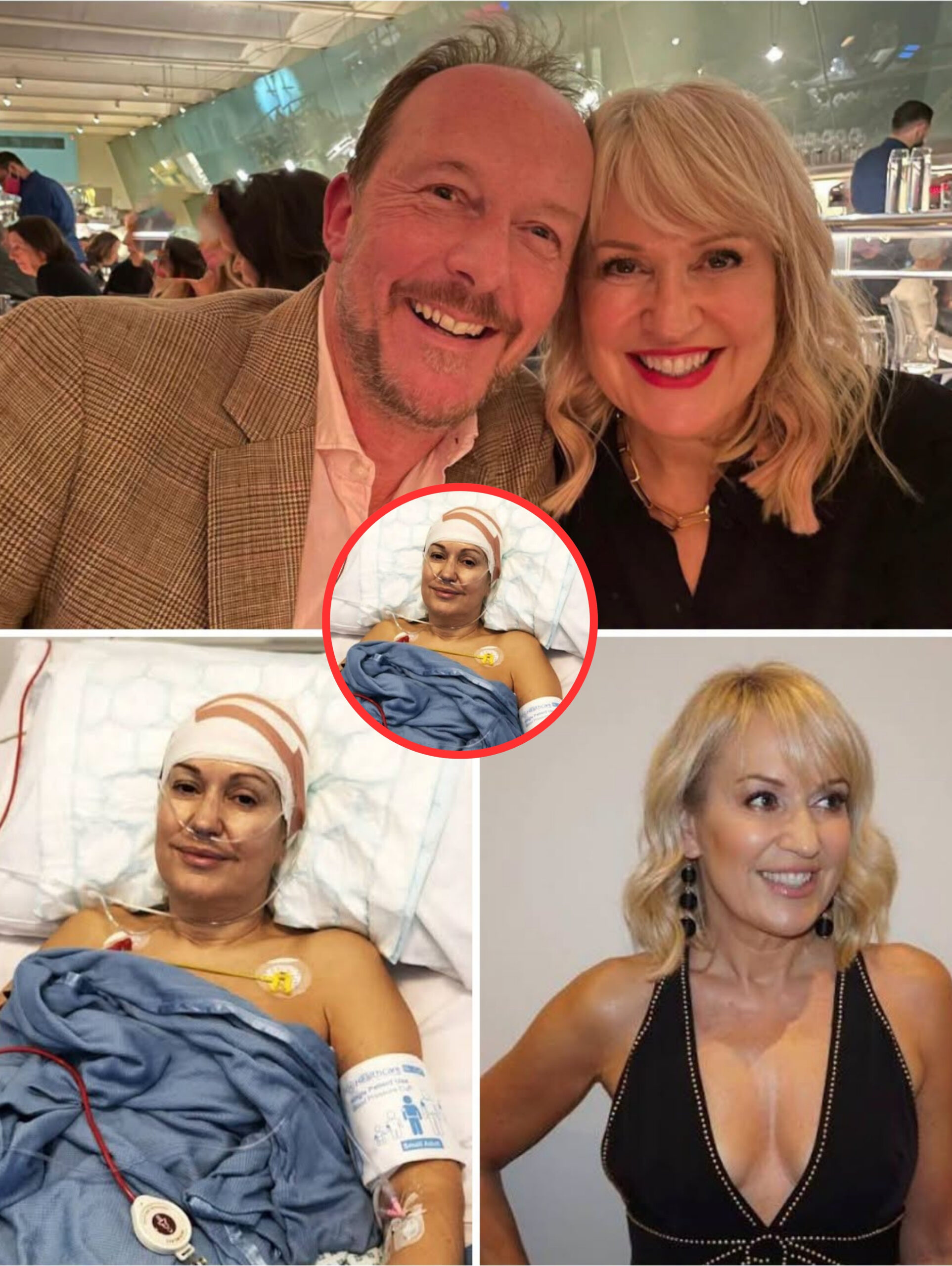
💔 “I WAS ON MY HANDS AND KNEES”: Nicki Chapman Reveals the Darkest Days After Her Golf-Ball-Sized Brain Tumour — and the Hidden Struggle She Still Faces
To millions of viewers, Nicki Chapman has always appeared calm, warm and reassuring.
Whether she is helping families search for a new beginning on Escape to the Country, presenting from the Chelsea Flower Show or offering compassionate advice to nervous contestants, Nicki seems like someone who can remain composed through almost anything.
But behind that familiar smile lies a terrifying chapter that brought the presenter to her knees — and left effects she is still learning to manage seven years later.
Nicki, now 59, has spoken candidly about the moment doctors discovered a golf-ball-sized tumour inside her head. Although the growth was non-cancerous, the diagnosis changed her life almost instantly.
As the date of her brain operation approached, her strength finally gave way.


“I was literally on my hands and knees,” she recalled of those desperately dark days.
The symptoms appeared without warning
Nicki’s ordeal began in spring 2019 while she was recovering from knee surgery.
There had been no long period of headaches or obvious warning that something was growing inside her head. Instead, the symptoms arrived suddenly and unfolded over approximately 24 hours.
Her vision changed. Reading words on a computer screen became difficult. She struggled to move her eyes smoothly across a line of text and found herself unable to type ordinary email responses properly.
During a voice-over session for Escape to the Country, another frightening sign appeared: Nicki temporarily forgot the name of an executive producer she had known for around 15 years.
Then her speech began to change.
She could picture familiar words in her mind, but getting them out became unexpectedly difficult. Nicki initially wondered whether tiredness, medication, migraines or the menopause could explain what was happening.
But when the problems continued, medical help became essential.
Doctors initially feared she might have suffered a stroke. Brain scans, however, uncovered something completely different: a golf-ball-sized meningioma pressing against her brain.
In her detailed account to The Brain Tumour Charity, Nicki explained that the sudden loss of vision and slurred speech led to the discovery.
“It’s like a slap”
The tumour was non-cancerous, but that did not make the diagnosis emotionally easy to process.
The word “benign” can sound reassuring, yet a benign brain tumour may still cause serious problems depending on its size and location. In Nicki’s case, doctors told her that surgery was needed because the growth was pressing on her brain.
She later described the diagnosis as a psychological blow that arrived in waves.
First came the shock of hearing the news herself. Then came the painful task of telling the people she loved.
“It’s like a slap,” Nicki said.
She initially shared the diagnosis only with a small circle of relatives and close friends. Part of that decision was about protecting her privacy, but it also gave Nicki and her husband, music executive Dave “Shacky” Shackleton, space to understand what was happening.
Once they returned home, Nicki reportedly wanted to prepare a hospital bag immediately in case she suddenly collapsed.
Dave tried to reassure her that she would be all right. Inside, however, Nicki was confronting the question that terrifies every patient facing major brain surgery:
What if I’m not?
The heartbreaking decision before surgery
As doctors prepared for the operation, the reality of the risks became impossible to avoid.
Nicki and Dave had to discuss subjects most couples hope they will never face. She insisted that they update and sign their wills before she entered hospital.
The paperwork was completed the day before her surgery.
For Nicki, sitting opposite the man she loved while signing a document that might determine what happened if she did not come home was almost unbearable. Dave remained her emotional anchor, holding himself together even as both understood what was at stake.
Nicki later acknowledged that serious illness does not affect only the patient. Loved ones are also frightened, but often feel pressure to remain positive and hide their own worst fears.
As the operation drew closer, Nicki’s carefully maintained composure collapsed. She wanted the tumour out, but she was terrified of what the procedure might take from her.
Those were the moments when Dave literally had to help pick her up.
Four and a half hours that changed everything
In May 2019, Nicki underwent a four-and-a-half-hour operation at Charing Cross Hospital in London.
The surgery was successful, and Nicki later praised the NHS team responsible for her care. Shortly after the procedure, she expressed astonishment at how quickly her physical recovery had begun. She was soon taking regular walks and no longer needed painkillers.
The reality, however, was more complicated than simply entering hospital with a tumour and leaving with the entire experience behind her.
Nicki later explained that surgeons had not removed every trace of the growth. She therefore continued to undergo regular scans so doctors could monitor what remained.
Then came an extraordinary phone call.
During a subsequent scan review, her consultant told her that the remaining tumour could no longer be seen. Nicki revealed in 2022 that it had “disappeared”, although she continued to approach the news cautiously. The Standard reported that she had been receiving annual scans and was given the remarkable update during a telephone appointment.
For a woman who had once feared she might not survive surgery, it was an overwhelming moment of relief.
But being tumour-free did not mean everything immediately returned to how it had been before.
The struggle viewers could not see
Nicki returned to television and rebuilt her busy professional life, but she has now revealed that certain everyday tasks require significantly more effort.
Reading has become more difficult — not because she cannot understand words, but because maintaining concentration and retaining information is harder than it once was.
Learning scripts also takes longer. Information that she might previously have absorbed quickly now requires additional time and focus.
Importantly, Nicki has not definitively blamed the change on her brain surgery alone. She has said that she does not know whether it is connected to the tumour, the operation, age or a combination of factors.
Nevertheless, the difference is real.
Speaking in July 2026, she explained that memorising lines and holding on to new information now takes longer. Yet she described the difficulty as a “small price to pay” for still being alive, according to her comments reported by Female First.
That admission reveals a side of recovery viewers rarely see.
A person may return to work, smile on camera and appear completely well, while still making countless invisible adjustments behind the scenes.
From the Spice Girls to Escape to the Country
Long before becoming a familiar television personality, Nicki had already built a remarkable career in the British music industry.
She began as a promotions assistant before becoming one of the industry’s most successful publicists. Her work involved some of the biggest names in entertainment, including the Spice Girls, Take That, Kylie Minogue, David Bowie, Billie Piper and Amy Winehouse.
Television audiences later came to know her as the compassionate counterweight to Simon Cowell on Pop Idol. While other judges became famous for cutting remarks, Nicki was admired for delivering honest criticism without unnecessarily humiliating contestants.
She eventually moved into factual and lifestyle television, joining Escape to the Country in 2009 and becoming one of the programme’s most recognisable presenters. Her official biography also records her extensive work on radio, the RHS Chelsea Flower Show and numerous BBC programmes.
The calm professionalism viewers see today carries even more meaning when considered alongside what she endured privately.
Every script learned, every voice-over completed and every day spent filming on location represents a quiet victory over the fear that once left her wondering whether her career — or her life — was about to end.
Turning fear into support for others
Nicki has refused to allow the tumour to become merely a frightening chapter she never discusses.
She became a high-profile supporter of The Brain Tumour Charity, using her public platform to raise awareness and remind patients that they do not have to face a diagnosis alone.
She has spoken honestly about fear, vulnerability and the “dark days” that can exist behind a brave public face. She has also encouraged people to accept support rather than believing they must remain strong every moment.
Her message is not that recovery is simple.
It is that hope and terror can exist together. A patient can feel grateful to be alive while still grieving the confidence, concentration or sense of safety they once had.
That honesty may be the most powerful part of Nicki’s story.
A warning that should never be ignored
Nicki’s symptoms initially resembled those of a stroke, and her experience demonstrates why sudden changes in speech or vision require urgent medical attention.
The NHS advises calling 999 immediately if someone suddenly develops slurred speech, difficulty finding words, blurred vision or loss of sight — even if the symptoms later disappear.
In Nicki’s case, scans revealed a brain tumour rather than a stroke. Getting assessed allowed doctors to identify the cause and begin treatment.
“I don’t want to give this life up”
Looking back, Nicki has admitted that the diagnosis forced her to confront how much she wanted to live.
She had enjoyed an extraordinary career, a loving marriage and opportunities many people could only dream about. Yet facing the possibility of losing everything made her appreciate ordinary life with new intensity.
The tumour did not leave her unchanged.
It made her more conscious of the invisible burdens other people may be carrying. It taught her to accept difficult days rather than fight herself for having them. And it showed her that strength is not about never collapsing.
Sometimes strength is being on your hands and knees, sobbing — and still allowing somebody who loves you to help you stand again.
Today, Nicki Chapman remains on television, continues to work and keeps speaking for people affected by brain tumours.
The scripts may take longer to learn. Concentration may demand more effort. But every time the cameras begin rolling, she offers a quiet answer to the question that once haunted her before surgery.
She survived.
And she is determined to make every chapter that followed count.