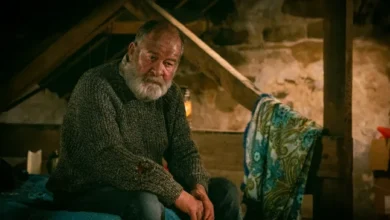
CORONATION STREET STAR BEVERLEY CALLARD’S CANCER UPDATE: “The Worst Is Yet to Come” — but what doctors meant is not what many fans first feared

💔 CORONATION STREET STAR BEVERLEY CALLARD’S CANCER UPDATE: “The Worst Is Yet to Come” — but what doctors meant is not what many fans first feared
Beverley Callard has spent decades portraying some of television’s toughest women, but her latest battle is painfully real. The 69-year-old former Coronation Street favourite, now appearing in Fair City, has completed her course of radiotherapy after being diagnosed with breast cancer earlier this year. Yet just when she believed she had coped remarkably well with treatment, doctors gave her a warning she was not expecting: “the worst is yet to come.” The words sound terrifying — but there is an important detail behind them. They referred to the delayed physical effects of radiotherapy, not confirmation that her cancer had worsened.
The phone call that changed everything
Beverley revealed publicly in February 2026 that she had been diagnosed with breast cancer.
The timing could hardly have been more surreal.
She had just begun a major new chapter in her career, joining Irish soap Fair City as Lily Patterson, when her consultant contacted her and told her she needed to return to the UK.
Beverley later explained that she was preparing to work when the diagnosis came.


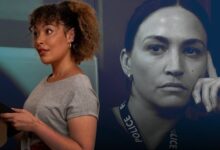
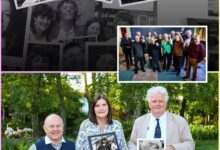
Only minutes before stepping into this exciting new television role, the actress was suddenly forced to confront a word that can make everything else feel unimportant:
cancer.
At the time, she stressed that doctors had caught the disease at an early stage and that further tests, surgery and radiotherapy would follow.
But even knowing it had been detected early could not completely remove the shock.
“I was just numb”
Months later, Beverley admitted that her first reaction was not panic or tears.
It was numbness.
The reality took time to sink in.
And instead of immediately stepping away from work, she did almost the opposite.
She kept going.
She continued learning lines.
She continued filming.
She turned up the next day and the day after that.
Why?
Because sitting at home, she explained, would only leave her thinking about cancer constantly.
For Beverley, work became more than a job.
It became a distraction.
Something she could control while so much about her health remained uncertain.
Surgery brought an important step forward
After the diagnosis, Beverley underwent surgery as part of her treatment.
By late April, she was able to share some encouraging news after tests on a lymph node suggested a relatively low score for aggressiveness, allowing doctors to move toward radiotherapy rather than a more intensive treatment route at that stage.
That did not mean everything was suddenly over.
Cancer treatment rarely follows such a simple line.
There were more hospital visits.
More tests.
More waiting.
At one stage she was even checked because of fears she might have developed a blood clot. Tests ruled that out, although doctors found a cyst behind her knee.
Then came radiotherapy.
Ten sessions — and Beverley refused to stop working
Beverley underwent a course of radiotherapy consisting of ten sessions.
Remarkably, she later said she managed to complete the treatment without missing a single day of work.
That mattered enormously to her.
She was proud.
She believed she had coped better than she expected.
And after the final session, there was understandable relief.
The part she had been anticipating was finally finished.
But then came the warning from the medical team.
Beverley told staff how pleased she was that she had managed to work throughout treatment.
Their response stopped her in her tracks.
“Yeah, but the worst is yet to come.”
Those words sounded frightening — but they had a specific meaning
Taken alone, “the worst is yet to come” could sound as though doctors had delivered devastating news about Beverley’s cancer.
That is not what she said happened.
The warning concerned the way radiotherapy side effects can intensify after the sessions themselves have ended.
And unfortunately, Beverley soon began experiencing exactly that.
Nausea.
Exhaustion.
Feeling completely wiped out.
And significant skin burns caused by the treatment.
So although she had walked away from her final radiotherapy appointment feeling she had handled the course remarkably well, her body was not finished reacting.
“I’m quite badly burnt”
By August 14, Beverley gave an even more candid update.
She said the radiotherapy had left her “quite badly burnt.”
She also described feeling nauseous, extremely tired and drained.
Yet in the same breath, she insisted she was coping well.
That contradiction says a great deal about the reality of treatment.
Someone can be physically struggling and still feel mentally determined.
Someone can be frightened and still continue working.
Someone can be exhausted and still refuse to define themselves solely by illness.
Beverley appears determined to occupy that difficult middle ground.
She is not pretending the treatment has been easy.
But she is equally unwilling to let it completely take over her life.
At one point, she worried she was not healing properly
The burns became uncomfortable enough for Beverley to contact the hospital.
She told followers that she was unsure whether she was healing as well as she should be.
The burning sensation was driving her “mad,” she said, while nausea remained intense.
For fans accustomed to seeing Beverley as the outspoken, formidable Liz McDonald, hearing her describe such vulnerability inevitably hit hard.
But her updates have also been strikingly matter-of-fact.
She does not appear to be trying to create a heroic version of cancer treatment.
She talks about the difficult days.
The fear.
The physical effects.
And the moments when staying positive simply is not enough.
Yet she still returned to work
Perhaps the most surprising detail is that Beverley has continued filming Fair City.
She said she had not missed a day because of radiotherapy and was back working even while recovering from its delayed effects.
People around her have apparently suggested that she should simply stay home and rest.
Beverley understands why.
But mentally, that approach does not suit her.
If she sits at home, she says, there is too much time to think.
Too much time to worry.
Too much opportunity for cancer to dominate every thought.
Learning scripts forces her brain elsewhere.
Characters.
Scenes.
Dialogue.
Work becomes a kind of psychological structure.
Beverley admits she has also had moments of self-pity
Importantly, she does not portray herself as endlessly upbeat.
She acknowledged that she too has sat and felt sorry for herself.
That matters.
Because the idea that someone with cancer must constantly be “brave” or “positive” can become another burden.
Beverley’s account is messier and more human.
She can be proud of herself for working.
She can also be frightened.
She can celebrate finishing treatment.
Then feel terrible days later.
Those emotions can exist together.
And one thing still remains unknown
Despite completing radiotherapy, Beverley does not yet know her final prognosis.
In her August 14 update, she said she was due to see her oncologist again in approximately two weeks.
Only then does she expect to know more about the results, her prognosis and what comes next.
That waiting period may be one of the hardest parts.
The active treatment has finished.
But the uncertainty has not.
There is still another appointment.
Still another conversation.
Still another set of answers she cannot control.
And that is why it would be misleading to suggest that “the worst is yet to come” means doctors have told Beverley something devastating about the cancer itself.
They have not publicly done so.
Her latest update is that she is recovering from radiotherapy side effects and waiting for further assessment.
The thought of cancer frightens her more than the treatment
Beverley made another revealing admission.
She said the actual treatment itself was not the thing she found most frightening.
The thought of cancer was.
That distinction is powerful.
Appointments can be scheduled.
Radiotherapy sessions have beginning and end dates.
Operations happen on specific days.
But the thought of cancer follows someone home.
It can appear at night.
During quiet moments.
While waiting for a phone call.
While wondering what a scan will show.
There is no appointment calendar for fear.
Her new Fair City chapter arrived at the strangest possible moment
There is also an extraordinary irony to the timing.
Beverley spent decades associated with Liz McDonald on Coronation Street, appearing on the soap from 1989 until 2020.
Then came a fresh start.
Ireland.
A new role.
A new soap.
A completely different character in Fair City.
Yet almost as soon as that professional reinvention began, cancer entered the picture.
Instead of allowing it to stop the new chapter, Beverley appears to have clung even more tightly to it.
Lily Patterson gave her scripts to learn.
Scenes to film.
Colleagues to see.
A reason to think beyond hospitals.
She has chosen to talk openly rather than disappear
Beverley could have kept much of this private.
Instead, she has repeatedly spoken about what is happening.
The diagnosis.
Surgery.
Tests.
Radiotherapy.
Burns.
Nausea.
Waiting.
In February, she explained one reason for going public: she had been inspired by other strong women and preferred to tell people herself rather than allow the story to become distorted.
That openness has continued.
Even when the news has been uncomfortable.
Especially when the news has been uncomfortable.
“The worst is yet to come” was not the ending
And this is perhaps the most important point.
The quote sounds like the final line of a tragic story.
It was not.
It was a warning about what Beverley’s body might experience after radiotherapy.
Those delayed effects arrived.
She became nauseous.
Exhausted.
Her skin became badly burned.
But she is still working.
Still talking.
Still moving through recovery.
And as of her latest public update, she says she is doing well overall despite not yet knowing the full prognosis.
Now comes the appointment that may provide the answer she is waiting for
For months, Beverley’s cancer journey has consisted of one stage after another.
Diagnosis.
Tests.
Surgery.
More results.
Radiotherapy.
Recovery.
Now the next major moment is not another treatment session.
It is a conversation with her oncologist.
That meeting should tell her more about where things stand and what, if anything, needs to happen next.
Until then, she remains in an uncomfortable space between relief and uncertainty.
Radiotherapy is behind her.
The side effects are still very real.
And the answers she most wants are not yet available.
Behind the frightening headline is a very different story
“The worst is yet to come.”
Six words that understandably alarmed fans.
But Beverley’s story is more nuanced than the phrase suggests.
Doctors were warning her that radiotherapy can continue affecting the body even after the final session.
They were not announcing that her cancer had suddenly become terminal or that treatment had failed.
For now, there is no public confirmation of either of those things.
Instead, the Coronation Street legend is doing something far less dramatic but perhaps much harder:
waiting.
Waiting for her body to heal.
Waiting for the burns and nausea to ease.
Waiting for her oncologist.
Waiting to hear what comes next.
And after decades of reading scripts where someone else had already written the ending, Beverley now finds herself inside a chapter where even she does not yet know the next line.