🚨 PAULINE HANSON’S “SHARIA-FREE AUSTRALIA” BILL IGNITES NATIONAL FIRESTORM 🇦🇺🔥
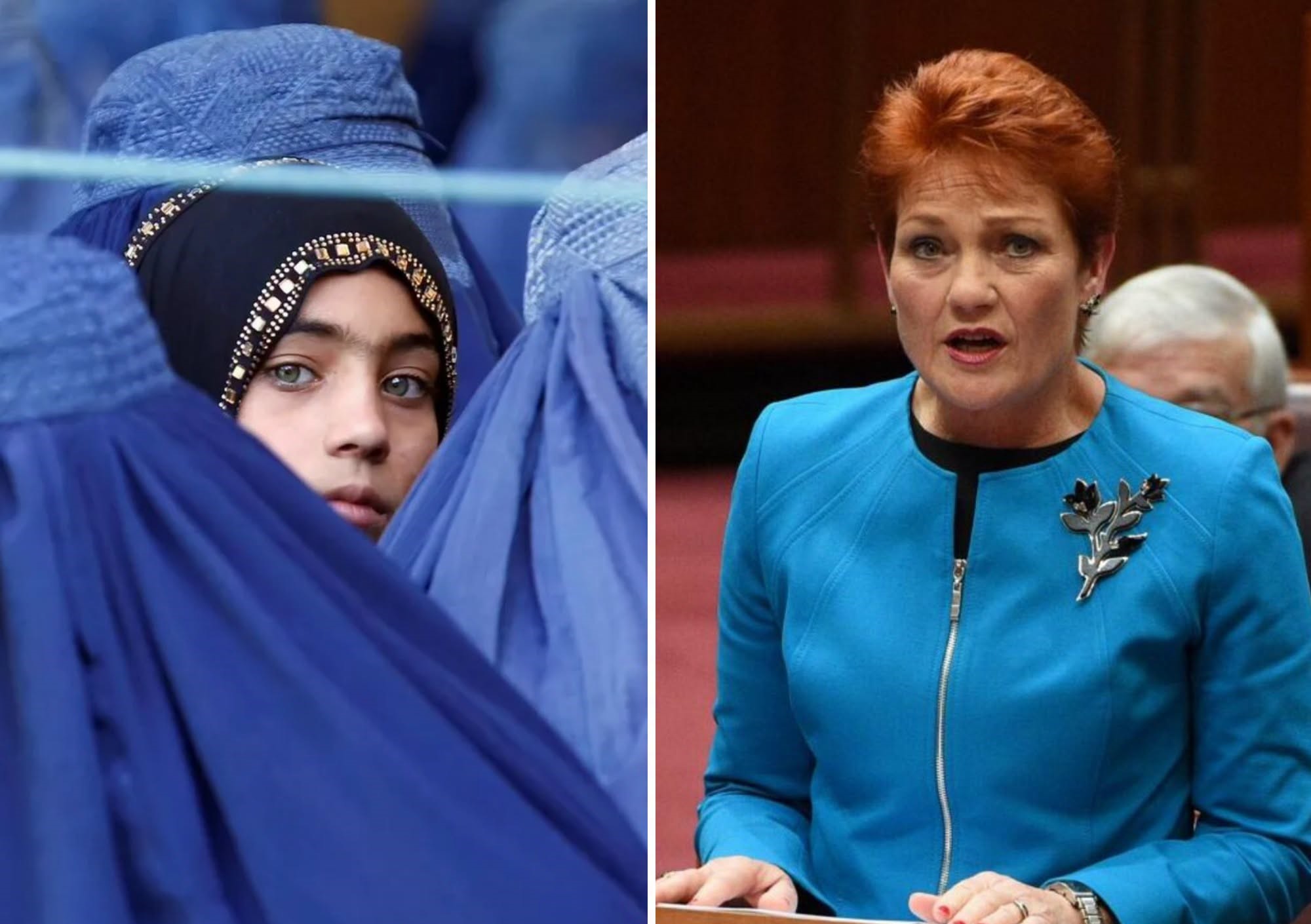
Australia’s political landscape has once again been thrown into the spotlight after One Nation leader Pauline Hanson unveiled a proposal that is rapidly becoming one of the most controversial political debates in the country.
The legislation, titled the “Sharia-Free Australia” bill, is being promoted by Hanson as a measure designed to ensure that Australian law remains the sole legal framework governing the nation.
Supporters describe it as a necessary defense of national sovereignty and legal consistency.
Critics see it as a highly divisive proposal that risks inflaming tensions around religion, immigration, and multiculturalism.



What began as a parliamentary proposal has quickly evolved into a national conversation touching on some of the most sensitive political questions facing Australia today.
And as reactions intensify across the political spectrum, the debate is becoming about far more than the bill itself.
It is increasingly becoming a broader argument about national identity, integration, and the future direction of Australian society.


According to Hanson, the purpose of the proposal is straightforward.
She argues that Australia should maintain a single legal system that applies equally to everyone regardless of cultural background, ethnicity, or religious affiliation.
Under her proposal, migrants who actively advocate for the implementation of Sharia law in Australia could face increased scrutiny.
Hanson maintains that Australian law must remain supreme and that alternative legal systems should not be encouraged within the country.
For her supporters, the proposal reflects concerns that have existed for years among sections of the electorate.
Many believe that successful multicultural societies require a shared commitment to a common legal framework.
They argue that legal consistency is essential for social cohesion and national unity.
From this perspective, Hanson’s proposal is not about targeting religion.
Rather, they see it as reinforcing the principle that Australian institutions and laws should remain the ultimate authority in public life.
Supporters frequently point to similar debates occurring across Europe and North America, where questions about integration, immigration, and national identity have become increasingly prominent.


Yet critics strongly reject that interpretation.
Opponents argue that Australia already operates under a single legal system and question whether the proposal addresses a genuine legal problem.
Many legal experts note that Australian courts do not recognize Sharia law as an alternative governing system.
From their perspective, the bill may therefore be more symbolic than practical.
Civil liberties advocates have also expressed concern about how such legislation could be enforced.
Questions quickly emerge regarding definitions.
What constitutes advocacy?
Where is the line between expressing religious beliefs and promoting an alternative legal system?
How would authorities distinguish between private religious discussion and political activism?
These concerns have become central to the criticism surrounding the proposal.
For opponents, vague legal definitions can create uncertainty and unintended consequences.
They argue that legislation touching on religion and political expression requires particularly careful consideration.
The debate has therefore expanded beyond immigration policy into broader discussions about freedom of speech, religious liberty, and democratic rights.


The controversy arrives at a time when immigration remains one of Australia’s most politically charged issues.
Concerns about population growth, housing affordability, infrastructure pressure, and social integration have become increasingly prominent in public discussion.
Both major parties have faced criticism from voters who believe migration levels have contributed to rising pressure on housing and public services.
As a result, proposals involving migration, citizenship, and cultural integration often generate strong reactions.
One Nation has consistently positioned itself as a party willing to address these topics more aggressively than the major parties.
Hanson’s latest proposal fits neatly into that political strategy.
Rather than focusing solely on economic arguments surrounding migration, the bill shifts attention toward cultural and legal questions.
Supporters see this as addressing concerns that mainstream politicians are reluctant to discuss.
Critics argue it risks deepening divisions within Australian society.
Either way, the proposal has succeeded in placing One Nation at the center of national political discussion once again.
That alone represents a political victory for a party that has long relied on challenging established narratives.


Political analysts suggest the significance of the proposal extends beyond its immediate legislative prospects.
Many controversial political initiatives never become law.
Yet they often influence public debate and pressure larger parties to respond.
This phenomenon has become increasingly common in modern politics.
Smaller parties frequently introduce proposals that force broader discussions even when they lack the parliamentary numbers to pass legislation independently.
In this case, the “Sharia-Free Australia” bill appears to be serving exactly that function.
The proposal has already triggered extensive media coverage.
It has generated strong reactions across social media.
And it has compelled politicians, commentators, and advocacy groups to publicly state their positions.
In doing so, it has expanded a conversation that reaches far beyond the details of the legislation itself.
The debate now encompasses questions about multiculturalism, national values, citizenship, integration, and Australia’s future social model.
Those issues have become increasingly important as Australia continues navigating demographic change and evolving political priorities.
Supporters of multiculturalism argue that Australia’s diversity remains one of its greatest strengths.
Critics argue that successful diversity requires stronger expectations around integration and shared civic values.
The Hanson proposal has effectively placed those competing visions into direct political confrontation.
What makes the situation particularly significant is the broader international context.
Across much of the Western world, similar debates have intensified.
European nations continue wrestling with questions surrounding migration, integration, and cultural identity.
The United States remains deeply divided over immigration and national values.
Political movements advocating stronger border controls and greater emphasis on national identity have gained support in numerous countries.
Australia is not isolated from these global trends.
Indeed, many of the same concerns driving political change elsewhere are increasingly visible within Australia itself.
That reality helps explain why the proposal has generated such widespread attention.
For supporters and opponents alike, the bill represents something larger than a single piece of legislation.
It represents competing visions of Australia’s future.
And that is precisely why emotions surrounding the debate have become so intense.
The discussion is no longer simply about legal frameworks.
Nor is it solely about religion.
It is about how Australia balances diversity, integration, individual freedoms, and national cohesion in an increasingly complex world.
One thing is becoming increasingly clear.
Whether the “Sharia-Free Australia” bill ultimately succeeds or fails, the political questions it has raised are unlikely to disappear anytime soon, and the debate surrounding national identity, immigration, and Australia’s legal and cultural future may continue shaping the country’s politics for years to come.