Sharia-Free Australia Bill Sparks Political Chaos in Canberra as Nation Splits Over Identity, Law and Freedom

The marble halls of Parliament House were already tense before sunrise. By midday, they felt electric.
Senator Malcolm Roberts had introduced what supporters immediately hailed as one of the most uncompromising immigration and national security proposals in modern Australian history: the “Preserving a Sharia-Free Australia Act.”
Within hours, Canberra descended into a political storm that spread far beyond the capital. Civil liberties advocates warned of constitutional chaos. Conservative commentators celebrated what they called a long-overdue defense of Australian identity. Muslim organizations accused the government of targeting faith under the banner of security. And legal scholars began openly debating whether the proposal could survive a High Court challenge.
The bill itself was bluntly worded and politically explosive.




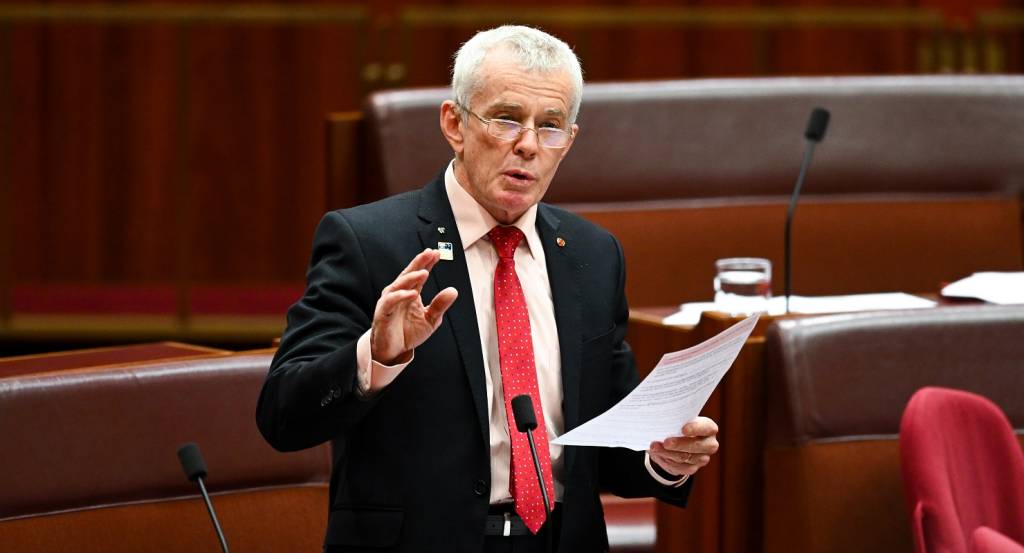
According to draft provisions circulated among senators, the legislation would empower immigration authorities to deny visas or revoke residency status for individuals who “publicly advocate, endorse, or seek implementation of Sharia-based legal structures in conflict with Australian constitutional authority.” The proposal would also allow deportation proceedings against non-citizens accused of promoting parallel legal systems rooted in religious doctrine.
At a packed press conference, Roberts defended the measure with characteristic force.
“Australia has one law for all people,” he declared, standing before a cluster of national flags and television cameras. “We cannot permit any ideology, religious or otherwise, that seeks to replace or undermine the supremacy of Australian law.”
The statement ricocheted across social media within minutes.
Outside Parliament House, protesters gathered before the afternoon session had even begun. One crowd waved Australian flags and carried signs reading “One Nation, One Law.” Across the lawn, counter-protesters held banners accusing lawmakers of “criminalizing belief” and “weaponizing fear.”
Police established temporary barriers as the shouting between the two groups intensified under the sharp Canberra wind.
Inside the Senate chamber, the debate grew even fiercer.
Government allies framed the bill as a preemptive security measure in an increasingly unstable world. Several conservative senators argued that Australia had ignored warnings seen in parts of Europe, where debates over integration, religious accommodation, and parallel community structures have fueled years of political division.
“This is not about ordinary Muslims,” one senator insisted during debate. “This is about extremist ideologies incompatible with liberal democracy.”
Opposition lawmakers rejected that distinction almost immediately.
Members of the Labor opposition accused Roberts and his allies of deliberately conflating religious practice with extremism. One senior MP called the proposal “a constitutional hand grenade wrapped in election-year politics.”
The phrase quickly dominated evening headlines.
Civil rights groups responded with alarm. The Australian Human Rights Commission issued a sharply worded statement warning that any law targeting individuals based on religious interpretation could violate protections embedded in anti-discrimination legislation and international treaties signed by Australia.
Constitutional scholars appeared divided.
Professor Elaine Mercer, a legal expert at the Australian National University, argued that portions of the legislation could face immediate High Court scrutiny.
“The government has broad migration powers,” she explained during a televised panel discussion. “But once the state begins defining which religious beliefs are acceptable, the legal terrain becomes extremely dangerous.”
Others disagreed.
Retired security officials appearing on conservative media networks argued that democracies had been too hesitant for too long to confront ideologies they viewed as incompatible with secular governance.
One former intelligence adviser described the proposal as “politically radioactive but philosophically necessary.”
The reaction within Australia’s Muslim communities was swift and emotional.
Leaders from several Islamic organizations condemned the bill as stigmatizing millions of law-abiding citizens and residents. Mosques in Sydney and Melbourne reported heightened security concerns after inflammatory online rhetoric surged throughout the day.
At a community center in western Sydney, dozens gathered for an emergency meeting that stretched late into the evening.
“We are Australians,” one local imam told reporters afterward. “We obey Australian law. We contribute to this country. Yet today many families feel they are being treated as suspects simply because of their faith.”
The international reaction began almost immediately.
Commentators in Britain, Canada, and parts of Europe compared the proposal to past immigration crackdowns that ignited fierce battles over national identity and multiculturalism. Some right-wing figures abroad praised Australia for “taking decisive action.” Human rights organizations overseas described the bill as discriminatory and dangerous.
Diplomats privately acknowledged concern that the debate could strain Australia’s relations with several Muslim-majority nations in the Indo-Pacific region.
Financial markets remained largely unmoved, but political strategists were watching closely.
With federal elections looming on the horizon, analysts believe the proposal may reshape national debate around immigration, integration, and cultural identity. Polling conducted after the announcement suggested strong support among some suburban and regional voters frustrated with rising social tensions and distrustful of establishment politics.
Yet the same surveys revealed deep unease among younger Australians and urban professionals who viewed the measure as an attack on pluralism itself.
By nightfall, television studios across the country had transformed into battlegrounds.
Conservative hosts framed Roberts as a politician willing to say what others feared to say publicly. Progressive commentators accused him of importing divisive culture-war politics into Australia’s fragile social fabric.
Even some lawmakers normally aligned with tougher immigration controls appeared uneasy with the language of the proposal.
Privately, several government figures worried the bill’s sweeping wording could trigger unintended consequences or provoke months of legal uncertainty.
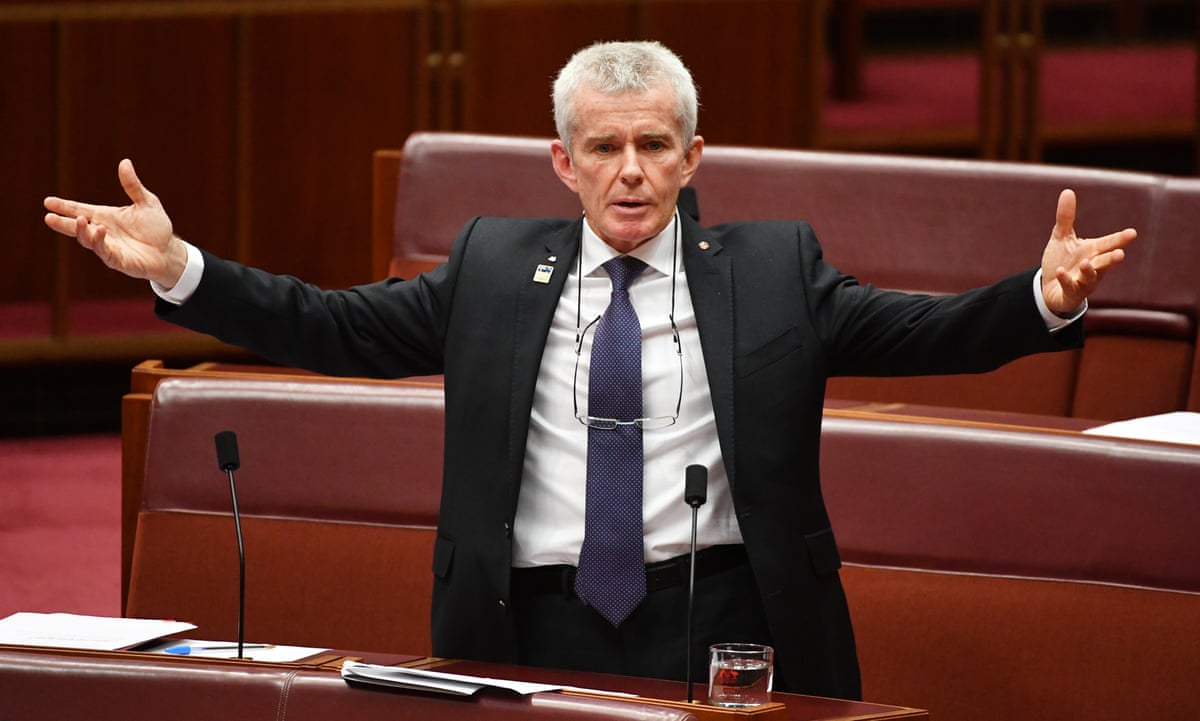
Meanwhile, Roberts remained defiant.
In a late-evening interview, he dismissed accusations of religious discrimination and insisted the bill targeted political ideology rather than faith itself.
“If a belief system seeks to supersede Australian law,” he said, “then Australians have every right to debate whether that ideology belongs here.”
The comment ignited another avalanche online.
Hashtags supporting the legislation surged alongside calls for nationwide demonstrations against it. Viral clips from parliamentary exchanges amassed millions of views before midnight. Security officials reportedly began preparing for possible protests in multiple cities later in the week.
Behind closed doors, senior ministers were already calculating the political risks.
Some feared the debate could deepen divisions within Australia’s multicultural communities at a moment when economic anxiety and housing pressures had already heightened public frustration. Others believed the controversy might strengthen populist movements demanding harder lines on immigration and national identity.
For now, the legislation’s future remains uncertain.
Legal experts predict fierce constitutional challenges if the bill advances. Moderate senators may push for amendments softening its language. Civil liberties organizations are preparing campaigns to mobilize opposition nationwide.
But regardless of whether the proposal ultimately passes, many observers believe something significant has already shifted.
What began as a single Senate bill has exploded into a broader confrontation over the meaning of Australian identity itself: whether national cohesion is best preserved through uncompromising uniformity or through protection of pluralism even under pressure.
And as midnight approached in Canberra, that question seemed far from settled.