‘A Joke’: AFP Commissioner Krissy Barrett Mocked Online for Displaying More Medals Than War Hero Ben Roberts-Smith
In the wake of the dramatic and highly controversial arrest of Australia’s most decorated living soldier, Ben Roberts-Smith, a new front has opened in the court of public opinion. This time, the focus is not on the battlefield of Afghanistan, but on the dress uniform of the woman who orchestrated the arrest: Australian Federal Police (AFP) Commissioner Krissy Barrett. Social media platforms have erupted with ridicule and stinging criticism as images of the Commissioner, adorned with a row of medals stretching across her chest, are being held up in stark contrast to the modest decorations often worn by the Victoria Cross recipient she has placed behind bars.
Commissioner Barrett, who made history in August as the first woman to lead the federal agency, personally fronted the media to announce the five counts of “war crime – murder” against Roberts-Smith. The arrest, conducted at a Sydney airport in front of his teenage daughters, was a highly choreographed affair involving a police film crew and, allegedly, tipped-off media teams from Nine Entertainment. However, the optics of the arrest have backfired spectacularly in certain quarters, leading to accusations that the AFP leadership is more focused on “performative decorations” and diversity quotas than on the visceral reality of military service.

Visual Contrast: AFP Commissioner Krissy Barrett’s extensive row of medals has sparked a wave of online mockery when compared to the combat decorations of the soldier she arrested.
The mockery intensified after a popular post on X (formerly Twitter) pointed out the numerical disparity in their decorations: “The DEI police chief who arrested Australia’s most decorated soldier for ‘war crimes’ has twice as many medals as Australia’s most decorated soldier. Think about that for a moment.” For many veterans and patriotic Australians, the comparison is more than just a matter of numbers; it is a question of the nature of the service those medals represent. While Roberts-Smith’s Victoria Cross and Medal for Gallantry were earned in the “fog of war” and high-stakes combat, Barrett’s accolades are largely seen as administrative and service-based recognitions.
Barrett’s medals include the Australian Police Medal, the Police Overseas Service Medal, and various emergency and service medals for leadership during bushfires and the Bali bombings investigation. While these represent a long and dedicated career within law enforcement, the internet has been less than kind. “Fake medals given to a girlboss DEI hire,” read one harsh but viral comment. The term “DEI” (Diversity, Equity, and Inclusion) has become a recurring theme in the criticism against Barrett, who earns an annual salary of $816,000 and has been a vocal advocate for a female-heavy leadership structure within the AFP.




The Commissioner has not shied away from her commitment to gender diversity, famously lauding her team of “boss ladies” during an International Women’s Day speech in March. “Two of our Deputy Commissioners are women, our Chief Operating Officer is a woman, our Chief Counsel is a woman… That is a lot of boss ladies!” she proclaimed. While intended to celebrate progress, these remarks have provided ammunition for critics who argue that the AFP has prioritized social engineering over its core mission of national security. They point to the fact that while Barrett’s “National Security Investigations” (NSI) teams were raiding citizens for “hate speech” online, the Bondi terrorists were allegedly planning their massacre undetected.

The “Justice vs. Emotion” debate is at the heart of this backlash. To her supporters, Barrett is a modern leader cleaning up a “toxic” culture within the special forces and upholding the rule of law. To her detractors, she is the face of an “activist” bureaucracy that is intent on tearing down national heroes to satisfy a progressive agenda. The decision to arrest Roberts-Smith in a public airport, rather than allowing him to present at a police station as his lawyers offered, is cited as evidence of a “theatrical” and “vindictive” approach to policing designed to maximize public humiliation.
Furthermore, Barrett’s past role as the AFP’s “First Nations Champion” has been brought into the spotlight. In this role, she focused on “diversity and inclusion strategies” and “inclusive workplace culture.” While these are standard corporate goals in 2026, the “Patriotic Aussie” movement sees them as a distraction from the escalating gang violence and machete attacks currently plaguing cities like Melbourne. They argue that a Police Commissioner should be focused on the “machete-wielding thugs” at shopping malls rather than monitoring the ideological purity of Australian citizens on social media.
The comparison between Barrett and Roberts-Smith has become a potent symbol for the broader cultural divide in Australia. It pits the “warrior ethos” of the SASR against the “managerial ethos” of the modern AFP. For many, the sight of Barrett’s chest full of medals, while she presides over the prosecution of a VC recipient, feels like a “disgraceful” inversion of traditional values. It taps into a deep-seated frustration that those who have never known the reality of combat are now sitting in judgment of those who have risked everything for the nation.
As the April 26th “Stand with Ben” rally in Melbourne approaches, this “Battle of the Medals” is likely to be a featured theme on the placards of protesters. The movement has adopted the “Enough is Enough” slogan, applying it not just to housing or immigration, but to what they see as the “woke” takeover of the nation’s security institutions. The question being asked in RSL clubs and on digital forums across the country is simple: Who are the real heroes? And why is the government so intent on punishing them while rewarding the “boss ladies” of the bureaucracy?
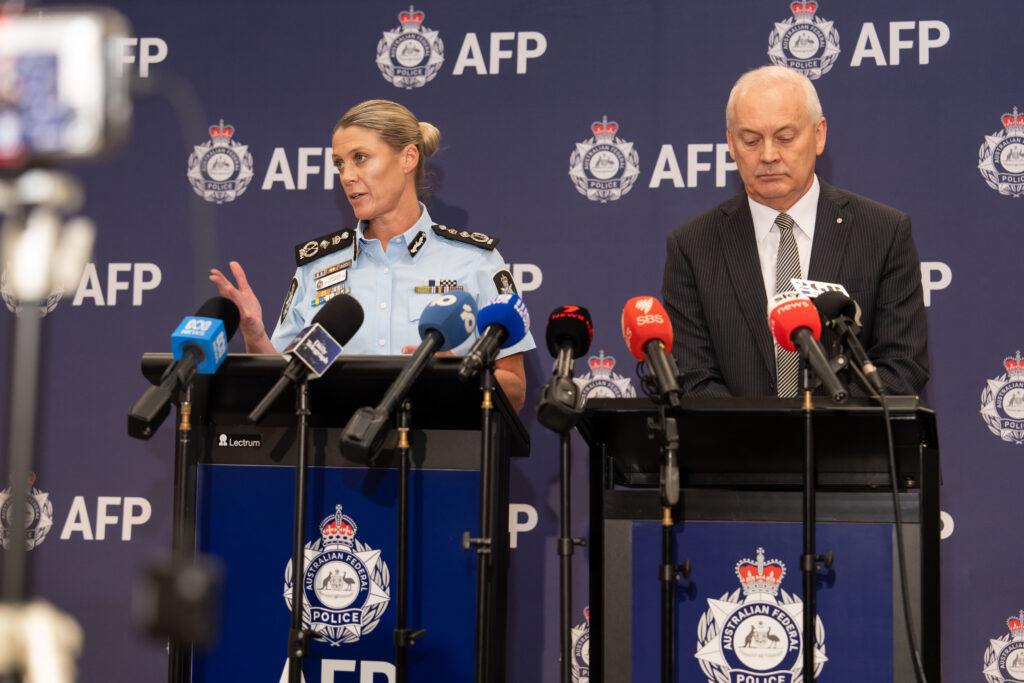
Despite the online storm, Commissioner Barrett remains steadfast in her position. Her administration continues to focus on “pre-crime” and “hate speech,” asserting that these are the frontiers of modern national security. However, the public’s “outpouring of fury” suggests that there is a significant portion of the population that disagrees. They see a Police Commissioner who is more concerned with “diversity outcomes” than with the fundamental safety of Australians or the dignity of its veterans. The “fake medals” narrative, whether fair or not, has stuck, creating a PR nightmare for the AFP at a time when institutional trust is already at an all-time low.
Ultimately, the story of Krissy Barrett’s medals and Ben Roberts-Smith’s arrest is about more than just two individuals. It is a referendum on the soul of the nation. It asks whether Australia still values the hard-won honors of the battlefield over the administrative trophies of the corporate state. As the legal proceedings against Roberts-Smith move forward, the “girlboss” mockery of Commissioner Barrett serves as a reminder that the Australian public is watching, and they are not easily fooled by a string of medals if they believe the person wearing them has forgotten the meaning of “Fair Go.”
The steps of Parliament House on April 26th will undoubtedly echo with these sentiments. The “Patriotic Aussies” are not just marching for a man; they are marching for a set of values they believe are being erased by a leadership team more focused on “boss lady” branding than on traditional justice. In the high-stakes game of national optics, Commissioner Barrett may have the medals, but the public support for Ben Roberts-Smith suggests that he still holds the hearts of the people. Enough is enough, and the battle for the narrative is only just beginning.