Bunnings boss says Australia at ‘tipping point’ due to high inflation and productivity woes
The boss of the company behind Bunnings and Kmart has issued a stark warning about the state of the Australian economy.
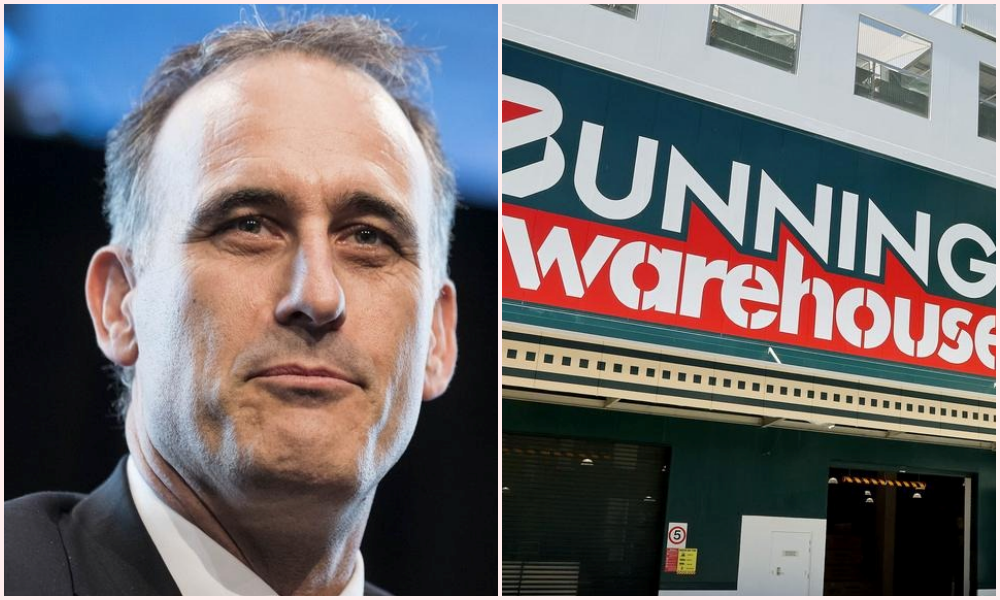
Wesfarmers CEO Rob Scott has warned Australia is at a “tipping point” due to high inflation and sagging productivity, and insisted the government must work with business to solve it.
Mr Scott made the comments as the company behind Bunnings, Kmart and Officeworks revealed an earnings beat on Thursday, with profit up 9.3 per cent to $1.6 billion in the first half of the 2026 financial year.
Sales were up 3.1 per cent to $24.2 billion and the company revealed it would boost its interim dividend by 7.4 per cent.
Bunnings led the charge with a 4 per cent sales bump, while Kmart’s sales were up 3 per cent, and Officeworks suffered an earnings drop of 22 per cent.




Weaker performance among some of the retail brands prompted a selloff with the share price tumbling 5.6 per cent on Thursday.
“I think we are at a tipping point and inflation arguably is the major challenge for the Australian economy,” Mr Scott told The Australian.
“The lack of productivity is an issue and so the reality is the government can’t solve this on their own, it really needs both business and government to work together.”
It comes after several economists told news.com.au that productivity was the key problem holding back Australia’s growth and driving up inflation and interest rates.

Wesfarmers CEO Rob Scott warned Australia is at a “tipping point” due to high inflation and sagging productivity. Picture: AAP/Tony McDonough

Wesfarmers revealed an earnings beat on Thursday, with profit up 9.3 per cent to $1.6 billion in the first half of the 2026 financial year. Picture: John Appleyard
Low productivity also caps real wage growth and leads to weaker living standards over time.
The country’s poor annual productivity growth of 0.8 per cent has been attributed to a boom in non-market sector jobs such as disability support workers.
Annual inflation came in at 3.8 per cent in December 2025, above the Reserve Bank of Australia’s (RBA) 2–3 per cent target range.
Last week the RBA responded by hiking the cash rate to 3.85 per cent.
Mr Scott said Wesfarmers would “double down” on value amid the economic headwinds.
“The actions we are taking in our business are really driving the entrepreneurial spirit around continuous improvement and investing for growth, the relentless focus on productivity,” he said.
“When we deliver on that we can deliver lower prices for customers, our team members benefit from better wages and incentives and our shareholders benefit.
“And I think that analogy should apply equally to the country. We all really need to lean into it. And it’s not easy to drive productivity but it’s the only sustainable way of delivering improvements in living standards.”

Experts say productivity is the key problem holding back Australia’s growth and driving up inflation and interest rates.
NAB CEO Andrew Irvine went further on Wednesday, telling The Australian Financial Review that 2026 could be “as good as it gets” for the economy unless the productivity issue is solved.
“The fact is, without productivity, Australia simply can’t grow any faster than it is today,” the banker said.
“I characterise this as peak Australia.”
Markets and major banks are forecasting another rate hike in May to bring inflation under control, spelling more pain for Aussie mortgage holders.
Some economists disagree, however, with former Treasury and OECD official Peter Downes telling news.com.au he expected inflation to come down due to the strength of the Australian dollar.
“We’ve got this large appreciation in the exchange rate — it’s now up by 7 per cent (this year) — and that’s more than enough to knock a percentage point off the inflation numbers by early next year,” Mr Downes said.
“That really takes the pressure off interest rates.”
Treasurer Jim Chalmers has flagged that the May budget will focus on productivity and tax reforms.